Choosing the right LVT flooring extrusion line is an important decision for flooring manufacturers planning to improve production efficiency, maintain consistent sheet quality, or expand their product range. The best equipment is not necessarily the machine with the highest rated output. It is the production line that matches the required flooring structure, material formulation, sheet dimensions, production volume, and finishing process.
For manufacturers producing luxury vinyl tile (LVT), equipment selection should cover the complete process, including PVC compound plasticization, extrusion, calendering, lamination, cooling, trimming, and cutting. Each stage affects the stability and quality of the finished flooring sheet.
SKY WIN offers flooring extrusion equipment for different manufacturing requirements, including high-speed LVT extrusion lines and double-layer LVT extrusion lines. This guide explains how to evaluate these options and what to confirm with an equipment supplier before making an investment.
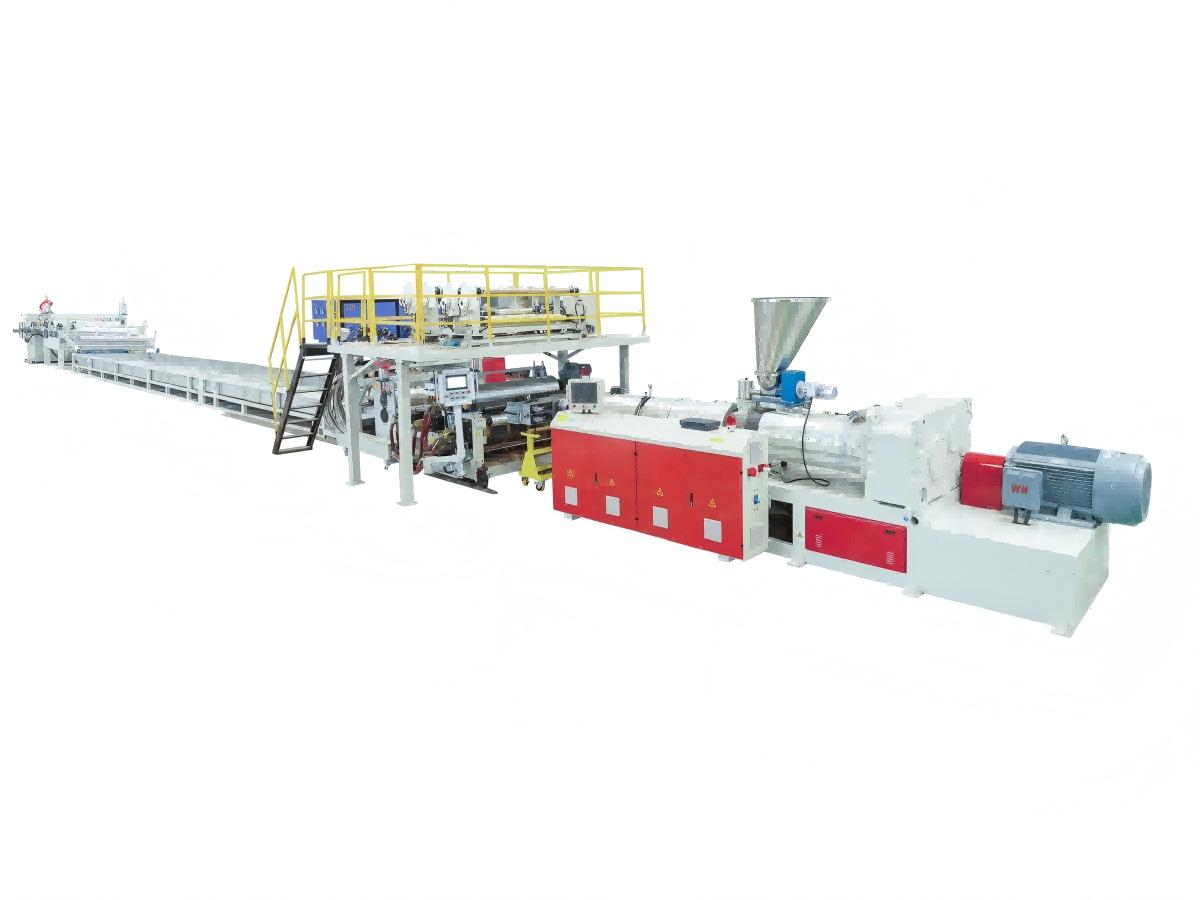
An integrated flooring extrusion line combines material processing with downstream sheet forming and handling.
Understand Your LVT Flooring Product Before Selecting Equipment
The first step in choosing an LVT flooring extrusion line is to define the product you intend to manufacture. Different flooring structures require different material formulations, extrusion conditions, layer arrangements, and downstream equipment.
Conventional flexible LVT flooring typically uses PVC resin, plasticizers, calcium carbonate, stabilizers, and other additives. Its flexibility and sheet thickness influence how the material is conveyed, calendered, cooled, and handled after extrusion.
Depending on the product design, manufacturers may need equipment for:
- Dry-back LVT flooring: Flexible flooring designed for adhesive installation, requiring the appropriate base sheet and finishing process.
- Loose-lay LVT flooring: Flooring that requires a suitable material formulation and physical properties for its intended installation method.
- Double-layer LVT flooring: A two-layer sheet structure produced through a co-extrusion process using separate extruders.
- LVT base sheets for further processing: Sheets intended for subsequent lamination, embossing, cutting, or other finishing operations.
These products should not automatically be assigned the same production configuration. Before comparing machine models, confirm the flooring structure, layer thickness, raw materials, and final application.
For manufacturers who need to evaluate different flooring sheet options, SKY WIN's flooring and plastic extrusion equipment range provides a starting point for comparing available production solutions.
Choose Production Capacity Based on Actual Demand
Production capacity is one of the most important factors when selecting an LVT flooring extrusion line. However, the highest rated output does not always represent the most suitable option for a factory.
A manufacturer with a moderate and stable order volume may benefit more from a properly sized line with manageable operating costs than from a larger system that remains underutilized. Conversely, manufacturers serving high-volume orders need to consider whether the extrusion, calendering, cooling, and cutting sections can maintain the required production rate together.
SKY WIN publishes the following specifications for its SWLVT high-speed LVT flooring extrusion line:
| Model | Extruder | Main Motor Power | Published Output |
|---|---|---|---|
| SWLVT-1 | 80/156 | 75 kW | 300–450 kg/h |
| SWLVT-2 | 92/188 | 110 kW | 500–700 kg/h |
| SWLVT-3 | 110/220 | 200 kW | 800–1200 kg/h |
These figures are the published model specifications. Actual production depends on the material formulation, sheet thickness, width, operating conditions, and quality requirements. Manufacturers should ask the supplier to confirm achievable output for their intended product rather than relying only on the maximum rated capacity.
For example, a factory producing relatively thin sheets at a high volume may have different requirements from one manufacturing thicker sheets with a more demanding layer structure. Cooling performance and downstream processing capacity must also be sufficient to support the target output.
Review the LVT Flooring High-speed Extrusion Line to compare the published machine specifications and available configuration options.
Match Sheet Thickness and Width to Your Product Specifications
Sheet thickness and width directly influence equipment selection. The extruder, T-die, calendering rollers, cooling section, and sheet handling system must be suitable for the dimensions of the intended product.
SKY WIN lists a sheet thickness range of 0.8–4 mm and a sheet width range of 970–1220 mm for its SWLVT high-speed extrusion line. Buyers should confirm the specific combination of thickness, width, material formulation, and output required for their own production plans.
When evaluating a machine, consider the following questions:
- Can the line maintain the required thickness across the full sheet width?
- Is the T-die suitable for the intended sheet dimensions and material formulation?
- Can the rollers handle the required sheet thickness without causing surface defects or deformation?
- Does the cooling system support stable sheet dimensions before cutting and further processing?
- Are tooling changes required when switching between different product specifications?
These questions are especially important for manufacturers producing several LVT specifications on the same line. A suitable configuration should support the planned product range without creating unnecessary changeover time or quality variation.
Evaluate the Extruder and Material Processing System
The extruder is responsible for plasticizing and conveying the PVC-based compound before it enters the die. Its screw design, processing capacity, temperature control, and compatibility with the formulation all influence the stability of the production process.
SKY WIN's high-speed LVT flooring extrusion line uses a twin conical screw configuration and is designed to process PVC resin and calcium carbonate formulations. The published product information also describes a conveying system intended for soft and thin LVT sheets.
When comparing extruders, manufacturers should evaluate:
- Formulation compatibility: Confirm that the equipment is suitable for the planned PVC compound, filler loading, plasticizer content, and additives.
- Plasticization stability: Consistent processing conditions help support a uniform material supply to the die.
- Temperature control: Appropriate temperature management helps reduce process fluctuations that may affect sheet appearance and dimensions.
- Wear resistance: Ask about screw and barrel materials, maintenance intervals, and replacement part availability based on the intended formulation.
Do not assume that an extruder suitable for one flooring formulation will automatically deliver the same results with another. If the material recipe or filler content will change, request confirmation from the equipment manufacturer before finalizing the machine specification.
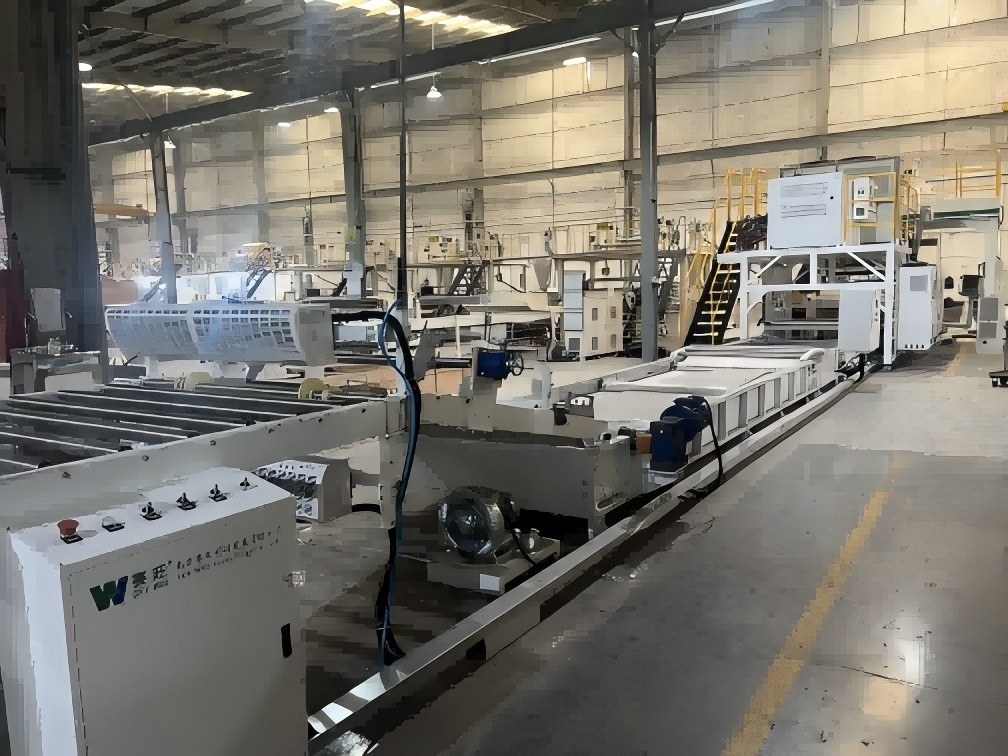
Extrusion equipment should be matched to the material formulation and required production conditions.
Check Calendering, Lamination, and Cooling Requirements
A suitable extruder is only one part of an LVT flooring production line. The downstream equipment determines how effectively the extruded material is formed into a sheet, combined with other layers, cooled, and prepared for subsequent processing.
Calendering uses a series of rollers to control sheet thickness, surface appearance, and material distribution. For multilayer products, the calendering and lamination arrangement must also support the required layer bonding.
SKY WIN's high-speed LVT line incorporates extrusion, calendering, and lamination functions. Its published features include a multi-roller calender system, temperature control, and optional configurations for embossing, online thickness control, and automatic stacking or rolling.
Before purchasing, confirm which functions are included in the quoted configuration and which are optional. In particular, check whether the line needs to include:
- A multi-roller calendering unit for sheet forming and thickness control.
- Online lamination for decorative film, wear layers, or other specified layers.
- Embossing equipment for the required surface texture.
- A cooling system capable of stabilizing the sheet at the intended line speed.
- Trimming, cutting, winding, or stacking equipment for the required output format.
Insufficient downstream capacity can become a bottleneck even when the extruder itself is capable of producing more material. The complete line should therefore be evaluated as an integrated production system.
Decide Whether a Single-Layer or Double-Layer LVT Line Is More Suitable
The number of material layers is another important selection factor. A single-layer sheet and a double-layer LVT product have different processing requirements, particularly when the manufacturer needs to control layer thickness, material distribution, and bonding performance.
A double-layer LVT extrusion line uses separate extruders to process the respective materials and combines them through a suitable die and calendering system. Depending on the product design, this arrangement can provide flexibility in layer composition and material utilization.
SKY WIN's Double-layer LVT Flooring Extrusion Line is designed to produce two-layer LVT sheets in a continuous process. The published configuration includes two twin-screw extruders, adjustable layer ratios, a multilayer calendering unit, and optional online lamination.
This type of line may be worth evaluating if your factory plans to manufacture two-layer flooring products or needs greater flexibility in the composition of the individual layers. However, the suitability of any layer ratio depends on the product design, raw materials, and required finished-flooring properties.
Before selecting a double-layer system, confirm the target layer thickness, material compatibility, bonding requirements, and whether the planned decorative and wear layers will be applied online or in a separate process.
Consider Automation, Factory Layout, and Operating Costs
The purchase price of an LVT flooring extrusion line is only one part of the investment. Manufacturers should also consider energy consumption, labor requirements, maintenance, material waste, tooling changes, and the availability of technical support.
Automation can help coordinate production stages and reduce the need for manual handling, depending on the configuration. Optional online thickness monitoring, automatic stacking or rolling, and integrated controls may be useful for factories that need more consistent process management.
Factory conditions should also be reviewed before the equipment is ordered. The production line must fit the available installation space and accommodate material storage, raw material feeding, finished-sheet handling, electrical supply, cooling water, and maintenance access.
When comparing suppliers, request clear information about:
- The complete equipment scope and optional auxiliary units.
- Installation and commissioning requirements.
- Expected operating conditions and energy requirements.
- Operator training and technical support.
- Spare parts, maintenance recommendations, and service arrangements.
- Potential upgrades if production volume or product specifications change.
A practical comparison should use the same product specifications, output targets, and equipment scope for every quotation. This makes it easier to evaluate the real investment rather than comparing machine prices in isolation.
Compare LVT Extrusion Line Options for Different Production Needs
| Production Requirement | Key Selection Priorities | Equipment Option to Evaluate |
|---|---|---|
| Standard LVT sheet production | Product dimensions, formulation compatibility, and stable sheet forming | High-speed LVT extrusion line |
| Higher-volume manufacturing | Rated output, cooling capacity, downstream speed, and process stability | Appropriately sized high-speed LVT line |
| Two-layer flooring production | Layer ratio, material compatibility, bonding, and calendering | Double-layer LVT extrusion line |
| Multiple sheet specifications | Tooling flexibility, changeover time, and operating range | A configuration confirmed for the intended product range |
This comparison is a starting point rather than a universal equipment recommendation. The final selection should be based on the manufacturer's actual product requirements, factory conditions, and production targets.
What Should You Prepare Before Requesting an LVT Extrusion Line Quotation?
Providing detailed production information helps an equipment supplier evaluate the appropriate machine configuration. It also reduces the risk of receiving a quotation that does not include all the equipment needed for your manufacturing process.
Before contacting SKY WIN, prepare the following details:
- Product type: Dry-back LVT, loose-lay LVT, double-layer LVT, or another specified structure.
- Material formulation: PVC resin, calcium carbonate, plasticizers, stabilizers, and other relevant additives.
- Sheet specifications: Required thickness, width, and dimensional tolerances.
- Target output: Expected production in kg/h or tons per day under the intended operating conditions.
- Finishing process: Lamination, embossing, cooling, trimming, cutting, stacking, or rolling requirements.
- Factory conditions: Available floor space, power supply, cooling facilities, and installation requirements.
- Support requirements: Commissioning, operator training, spare parts, and after-sales service.
The more specific the information, the easier it is to assess whether a standard configuration is sufficient or whether adjustments are needed. It also provides a clearer basis for comparing equipment suppliers on a like-for-like basis.
How SKY WIN Can Support Your LVT Flooring Production Project
SKY WIN supplies extrusion equipment for flooring and other plastic processing applications. Its LVT product range includes high-speed extrusion lines and double-layer extrusion systems designed for different sheet production requirements.
Rather than choosing a machine based only on its model name or maximum output, manufacturers should evaluate the entire production process. The right combination of extrusion, calendering, lamination, cooling, and downstream handling equipment can help create a production system suited to the factory's product specifications and manufacturing objectives.
If you are planning a new LVT flooring project or upgrading an existing production line, share your intended flooring structure, material formulation, sheet dimensions, and target output with SKY WIN. These details provide a practical starting point for discussing equipment selection and configuration.
Explore the available PVC Flooring SPC/LVT Sheet Extrusion Line to review another flooring sheet production option, and confirm its suitability for your specific LVT application with the manufacturer.
Frequently Asked Questions About Choosing an LVT Flooring Extrusion Line
What is an LVT flooring extrusion line?
An LVT flooring extrusion line is a production system that processes PVC-based compounds into flooring sheets. Depending on the configuration, it can combine twin-screw extrusion, die forming, calendering, lamination, cooling, trimming, and cutting.
How do I choose the right LVT flooring extrusion line?
Choose an LVT flooring extrusion line according to the flooring structure, material formulation, required sheet thickness and width, target output, surface finish, and downstream processing requirements. Confirm that the complete line can achieve the required specifications under realistic production conditions.
What is the output of SKY WIN's high-speed LVT extrusion line?
SKY WIN publishes output ranges of 300–450 kg/h for SWLVT-1, 500–700 kg/h for SWLVT-2, and 800–1200 kg/h for SWLVT-3. Actual output depends on the material formulation, sheet dimensions, operating conditions, and quality requirements.
What sheet thickness can SKY WIN's high-speed LVT line produce?
The published specification for the SWLVT high-speed LVT extrusion line lists a sheet thickness range of 0.8–4 mm and a sheet width range of 970–1220 mm. Confirm the required dimensional combination and achievable output with SKY WIN before purchasing.
What is the difference between a standard LVT line and a double-layer LVT line?
A standard LVT extrusion line is selected according to its intended sheet structure and processing requirements. A double-layer LVT line uses separate extruders to produce two layers in a continuous process, allowing the manufacturer to configure the layer structure according to the product design.
Why are calendering and cooling important in LVT production?
Calendering helps control sheet thickness, surface quality, and layer bonding. Cooling helps stabilize the sheet before downstream handling. Both processes must be matched to the extrusion output and product specifications to maintain consistent production.
Can one LVT extrusion line produce different flooring specifications?
Some configurations can accommodate a range of sheet thicknesses, widths, or product structures. However, the achievable range depends on the extruder, die, calendering system, material formulation, tooling, and downstream equipment. Confirm the intended product range with the supplier.
What information is needed for an LVT extrusion line quotation?
Prepare the flooring type, raw material formulation, target sheet thickness and width, required output, layer structure, surface finishing requirements, factory conditions, and automation preferences. This information helps the supplier recommend an appropriate production line configuration.
Looking for an LVT flooring extrusion line for your factory? Contact SKY WIN with your product specifications and production targets to discuss a suitable equipment solution.