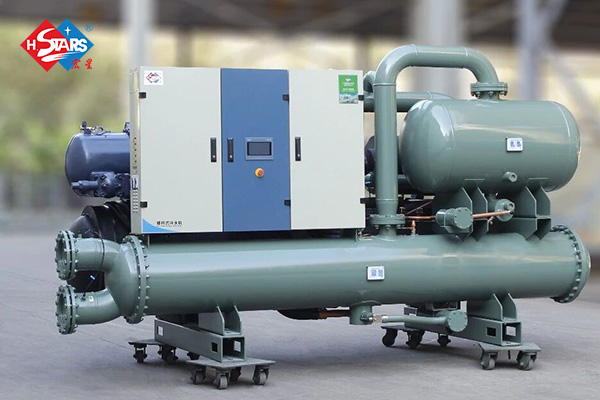
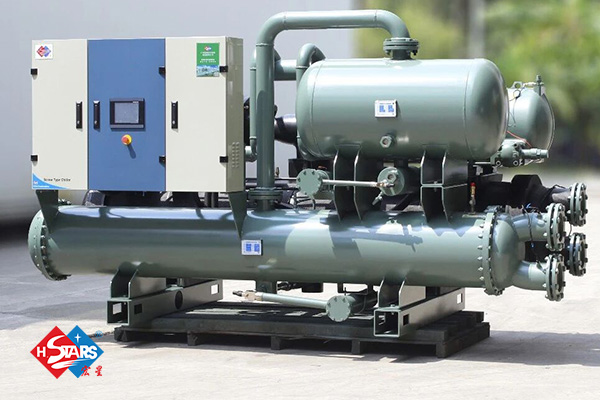
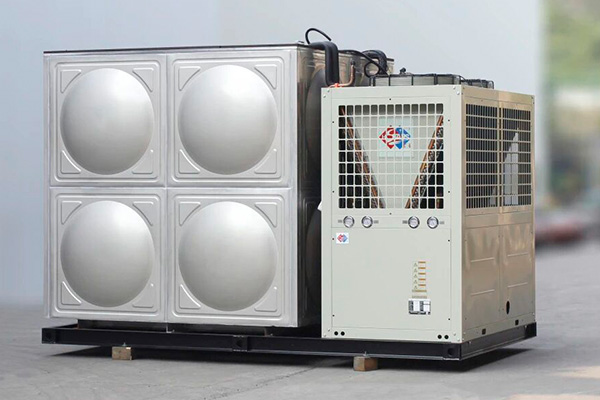
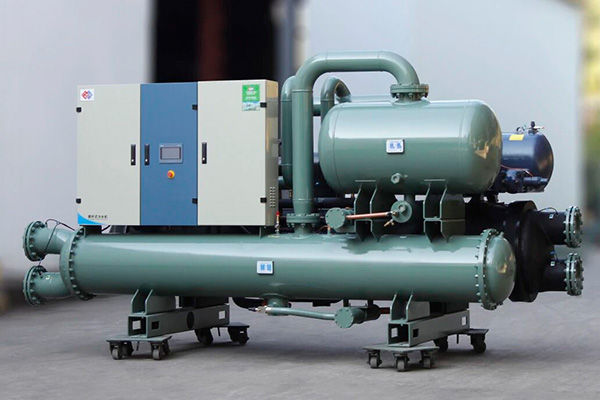
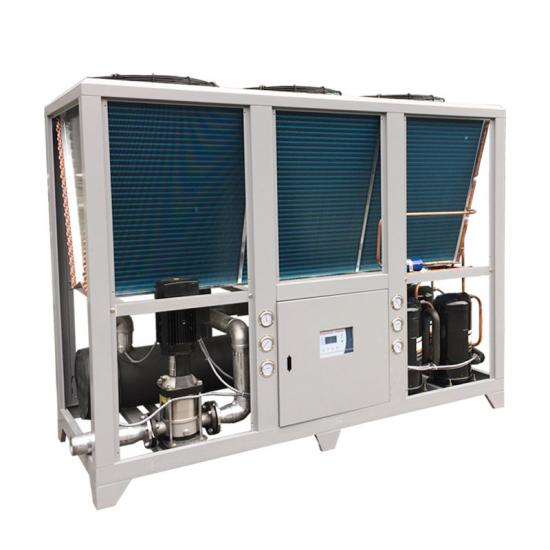
Flooded screw chillers are widely used in industrial cooling systems due to their high efficiency, stable operation, and suitability for large cooling loads. Among the various refrigerants available, R22 refrigerant has long been a popular choice for many flooded screw chiller applications. So, what advantages does R22 offer in flooded screw chiller systems? Let’s explore the key benefits.
Reliable Performance and Cost Efficiency
One of the primary advantages of R22 refrigerant is its reliable performance combined with relatively low operating costs. R22 has stable thermodynamic and chemical properties, which allow it to maintain high refrigeration efficiency under a wide range of operating conditions. This stability helps ensure consistent cooling performance while reducing energy consumption. Compared with some other refrigerants, R22 systems often require less complex system design and lower maintenance costs, making them an economical solution for many industrial cooling projects.
Stable Operation in Various Working Conditions Flooded screw chillers using R22 refrigerant are known for their excellent operational stability. R22 performs well across different environmental conditions, especially in high ambient temperature environments, where some refrigerants may experience performance degradation. This stability helps the chiller: • Maintain consistent cooling capacity • Improve system reliability • Extend equipment service life For industrial facilities that operate continuously, this reliability is a major advantage.
Mature Technology and Wide Industry Adoption Another benefit of R22 is its long history of industrial use. Because R22 has been widely applied in refrigeration and HVAC systems for decades: • The technology is mature and well understood • Maintenance technicians are familiar with the system • Spare parts and service resources are widely available This widespread adoption reduces operational risks and simplifies system maintenance and troubleshooting.
Good Compatibility with Flooded Screw Chiller Design
Flooded screw chillers rely on efficient heat exchange between refrigerant and the evaporator. R22 has excellent thermodynamic properties, which allow it to perform well in flooded evaporator systems. This results in: • Improved heat transfer efficiency • Higher system COP (Coefficient of Performance) • Stable compressor operation These characteristics make R22 well suited for large-capacity industrial chillers.
Important Consideration: Environmental Regulations
While R22 offers many performance advantages, it is important to note that it is classified as an HCFC refrigerant and is being gradually phased out in many countries due to environmental regulations. Therefore, when selecting a chiller system, users should also consider: • Local refrigerant regulations • Long-term refrigerant availability • Potential alternatives such as R134a, R407C, or R1234ze Many manufacturers now provide both R22-based systems and environmentally friendly alternatives depending on project requirements.
Conclusion
Flooded screw chillers using R22 refrigerant offer several practical advantages, including: • Reliable and stable cooling performance • High refrigeration efficiency • Mature technology and widespread industry support • Good compatibility with flooded evaporator systems These benefits have made R22 a widely used refrigerant in industrial chiller applications. However, considering global environmental policies, businesses should also evaluate future refrigerant options when planning long-term cooling solutions.
Tensile strength refers to the maximum tensile stress a rubber material can withstand before breaking under uniform tension, typically measured in MPa (megapascals). It directly reflects a rubber material’s ability to resist tensile failure caused by external forces and serves as an indicator of its physical and mechanical properties. The magnitude of this value directly determines the durability and reliability of rubber products under actual operating conditions.
From a material perspective, the tensile strength of industrial rubber stems from the cross-linked network of its molecular structure. Natural rubber and synthetic rubbers (such as styrene-butadiene rubber, polybutadiene rubber, and chloroprene rubber) form a three-dimensional network structure through vulcanization. Intermolecular forces and chemical bonds work together to impart elasticity and tensile strength to the rubber. When tensile strength is insufficient, rubber products are highly prone to localized cracking, overall fracture, and other issues when subjected to slight stretching, pulling, or repeated deformation, leading to premature failure. Conversely, excellent tensile strength enables rubber products to stably withstand external forces under complex operating conditions, maintaining their shape and functionality over the long term.
II. Tensile Strength Testing: Principles, Process, and Key Indicators
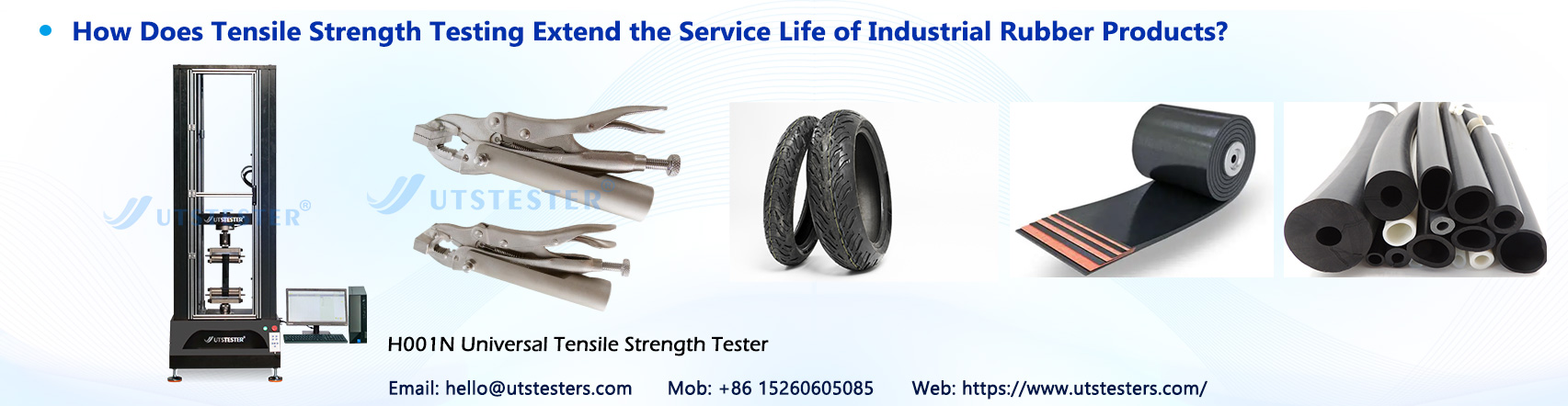
Tensile strength testing is a standardized process that uses specialized testing equipment to simulate the actual stress conditions experienced by rubber products and quantify their tensile performance. It is primarily conducted using a universal testing machine (also known as a tensile testing machine). The entire process strictly adheres to industry standards such as GB/T 528-2009 “Determination of Tensile Stress-Strain Properties of Vulcanized Rubber or Thermoplastic Rubber” and ISO 37 to ensure the accuracy and comparability of the data.
(1) Sample Preparation
1. Sample Cutting: In accordance with standard requirements, rubber materials are cut into test specimens that meet specified dimensions. Common shapes include dumbbell-type specimens (such as Type 1 and Type 2). The width and thickness of the parallel section in the middle of the specimen must be uniform, and the specimen must be free of defects such as bubbles, cracks, or impurities; otherwise, this may lead to deviations in test data.
2. Environmental Conditioning: Rubber properties are significantly affected by temperature and humidity. Testing must be conducted under standard environmental conditions (temperature 23°C ± 2°C, relative humidity 50% ± 5%) to avoid interference from extreme conditions.
3. Instrument Calibration: Calibrate the universal testing machine’s force transducer and tensile speed in advance to ensure measurement accuracy meets requirements (typically force accuracy ≤ ±0.5%).
(2) Testing Procedure
1. Specimen Installation: Secure both ends of the prepared rubber specimen in the upper and lower grips of the testing machine, ensuring the specimen is centered within the grips to prevent uneven stress distribution caused by skewed clamping.
2. Parameter Setup: Set the tensile speed based on the actual application scenario of the rubber product (the standard testing speed for rubber is 500 mm/min, but this can be adjusted for special conditions), then start the testing machine.
3. Data Acquisition: The testing machine uses sensors to record the tensile force and deformation of the specimen in real time throughout the tensile process until the specimen completely breaks. The system automatically generates a force-displacement curve, with key data including tensile strength, elongation at break, and elastic modulus.
(3) Key Indicators
1. Tensile Strength: Directly reflects the tensile limit of the rubber and is the core indicator for determining whether the product meets operational requirements.
2. Elongation at Break: The percentage of the original gauge length that the rubber specimen stretches before breaking, reflecting the rubber’s ductility.
3. Modulus of Elasticity: The ratio of stress to strain during the initial stage of tensile testing, reflecting the rubber’s stiffness.
III. How Does Tensile Strength Testing Accurately Extend the Service Life of Rubber Products?
(1) Design Phase
Product design is the foundation for determining service life, and tensile strength testing provides critical data for rubber material and formulation design.
- Prevent Performance Deficiencies: If tensile strength testing is not conducted during the design phase and low-strength rubber materials are selected without proper evaluation, the product may fail prematurely during actual use.
- Avoiding Over-Engineering: An excessive pursuit of high tensile strength may increase the cost of the rubber formulation, complicate processing, and even compromise other properties such as elasticity and abrasion resistance.
Additionally, tensile strength test data can assist in optimizing product structural design. By testing the tensile strength distribution under different structural designs, structural curvature and thickness can be optimized to reduce localized stress concentration, thereby enhancing the product’s resistance to tensile failure from a structural perspective.
(2) Production Stage
During rubber production, factors such as the vulcanization process, raw material ratios, and processing precision directly influence the formation of the rubber molecular cross-linking network, thereby altering tensile strength. Tensile strength testing serves as a “quality control checkpoint” in the production process, enabling process optimization and performance stability.
- Vulcanization Process Optimization: Vulcanization time, temperature, and pressure are key determinants of rubber cross-linking density. Insufficient vulcanization results in incomplete cross-linking of rubber molecules, leading to low tensile strength; over-vulcanization, with excessively high cross-linking density, causes the rubber to become brittle. Although tensile strength may increase, the elongation at break decreases significantly, making the material prone to brittle fracture. By conducting regular tensile strength tests on production batches, optimal vulcanization parameters can be precisely determined, ensuring consistent tensile performance across every batch.
- Raw Material Formulation Control: The ratio of different rubber raw materials and additives (such as carbon black and vulcanizing agents) significantly affects tensile strength. Through tensile strength testing, raw material formulations can be optimized to find the optimal balance between “strength, processability, and cost,” thereby avoiding product performance fluctuations caused by formulation errors.
(3) Application Stage
- Static Tensile Applications (e.g., pipe sealing gaskets): Focus on tensile strength and long-term deformation performance to prevent rubber fatigue and aging caused by prolonged tension;
- Dynamic Tensile Applications (e.g., automotive hoses, rubber springs for vibrating screens): Balance tensile strength, elongation at break, and fatigue resistance to select rubber materials suitable for dynamic operating conditions through testing.
- Service Life Prediction and Maintenance: By continuously monitoring changes in tensile strength during the service life of rubber products, service life prediction models can be established.
(4) Aging Protection
Industrial rubber exposed to external environments over extended periods may experience issues such as reduced tensile strength and loss of elasticity due to thermal-oxidative aging, ozone aging, and chemical corrosion. Tensile strength testing can be used to evaluate the rubber’s resistance to aging and guide the development of protective measures.
- Screening of Anti-Aging Materials: By comparing the aging rates of tensile strength in rubber after adding different anti-aging additives (such as antioxidants and ozone protectants), long-lasting anti-aging formulations can be identified.
- Optimization of Protection Strategies: For special operating conditions such as high temperatures and high corrosion, tensile strength testing can be used to evaluate the adhesion performance of different protective layers (e.g., anti-corrosion coatings, metal cladding) to the rubber substrate. This ensures that the protective layers do not peel off, providing continuous protection against external erosion and delaying the deterioration of tensile properties.
Test Method: Place the test sample alongside a blue wool standard fabric under a xenon arc lamp or carbon arc lamp. The grade is determined by comparing the degree of color change (1–8, with 8 being the best).
2. Wash Fastness
Outdoor apparel requires frequent washing to remove sweat stains and dirt. According to GB/T 3921-2008 “Textiles—Color Fastness Tests—Soap Wash Fastness,” infant and children’s clothing must have a wash fastness (color change) of ≥4, while outdoor functional fabrics, due to harsher usage environments, typically require a rating of 4–5.
Test Method: Sew the test sample to a standard backing fabric, then wash it under specific conditions (typically at 40–60°C, with a specific detergent concentration and mechanical agitation) to evaluate the degree of color change and color transfer.
3. Rubbing Color Fastness
During outdoor activities, fabrics frequently rub against backpacks, rocks, and equipment, making areas prone to friction—such as collars, cuffs, and the seat—particularly susceptible to color loss. According to standard requirements, the rubbing color fastness of outdoor fabrics must be ≥ Grade 4 for dry rubbing and ≥ Grade 3 for wet rubbing.
Test Method: Using a color fastness to rubbing tester, the sample is subjected to a specified number of back-and-forth rubs with dry/wet rubbing cloths under standard pressure, and the results are graded using a gray scale (1–5).
4. Perspiration Fastness
During outdoor activities, heavy sweating occurs, and acidic or alkaline substances in sweat can accelerate dye leaching. According to GB/T 3922-2013, both acid sweat fastness and alkaline sweat fastness must be tested separately.
5. Water/Seawater Fastness
For water sports equipment and swimwear, water fastness (GB/T 5713) and seawater fastness (ISO 105-E02) must also be tested to ensure the fabric does not fade or bleed in wet conditions.
II. Factors Affecting the Color Fastness of Outdoor Fabrics
1. Choice of Dyes
The manner in which dyes bond with fibers directly determines the level of color fastness:
- Reactive dyes: Suitable for cellulose fibers such as cotton and linen; they produce vivid colors but have relatively poor wet rubbing fastness
- Disperse Dyes: Suitable for synthetic fibers such as polyester; require high-temperature, high-pressure dyeing
- Reducer Dyes: The dye becomes insoluble in water after fixation, offering better wet-rub fastness than reactive dyes
- Solution Dyeing: Color masterbatches are added while the fiber is in a molten state; this method provides the best color fastness and is particularly suitable for outdoor applications involving prolonged exposure to sunlight
2. Dyeing Process
- Temperature Control: For dark-colored fabrics, the dyeing temperature may be appropriately increased, but the heating rate must be strictly controlled to prevent uneven dyeing
- Holding Time: Dark-colored fabrics require extended holding times to ensure thorough dye-fiber bonding
- pH Management: Different dyes have optimal pH ranges for dye uptake, which must be precisely controlled
3. Use of Auxiliaries
- Retarders: Dosage must be strictly controlled; excessive amounts will reduce dye uptake and binding strength
- Fixatives: Proper use can improve colorfastness by 0.5–1 grades, but attention must be paid to the compatibility between the fixative type and the dye
- Softeners: Used during the finishing stage, but may react with dyes and reduce colorfastness; dosage must be just right
4. Post-Dyeing Washing
After dyeing, thorough soap washing and rinsing must be performed to ensure the removal of excess dye from the fabric surface. Insufficient washing temperature or duration will result in residual excess dye, severely affecting the final colorfastness.
III. Strategies for Improving Color Fastness in Outdoor Fabrics
Strategy 1:
For products exposed to prolonged outdoor sunlight (such as awnings, boat covers, and outdoor furniture fabrics), we recommend using solution-dyed polyester or nylon fibers. This technique involves adding color masterbatches during the polymer melting stage, making the color an integral part of the fiber and providing exceptional lightfastness and weather resistance.
Strategy 2:
1. Thorough pretreatment: Ensure the fabric is thoroughly desized, scoured, and bleached to create a uniform base for dyeing.
2. Batch addition: For dark-colored fabrics, add auxiliaries and dyes in separate batches to improve absorption.
3. Strict fixation: Control the amount of fixing agent (typically 2–4%), temperature (50–60°C), and time (20–30 minutes).
4. Thorough rinsing: Use a progressive rinsing process, starting with warm water, followed by soapy water, and finally a clear water rinse
Strategy 3
Outdoor fabrics often require functional finishes such as waterproofing, stain resistance, and antimicrobial treatments, but these finishes may react with the dyes. Recommendations:
- Select functional finishes with good compatibility with the dyes
- Control the dosage of finishing agents to avoid excessive cross-linking, which can lead to a stiff handfeel and reduced colorfastness
- For dark-colored fabrics, it is recommended to conduct small-batch trials first to assess the impact on colorfastness
IV. Professional Textile Testing Instruments
- Lightfastness tester: Complies with GB/T 8427 and ISO 105-B02 standards, equipped with a xenon arc light source
- Wash Fastness Tester: Supports multiple washing programs with temperature control accuracy of ±1°C
- Rub Fastness Tester: Capable of dry/wet rubbing tests with adjustable pressure and stroke
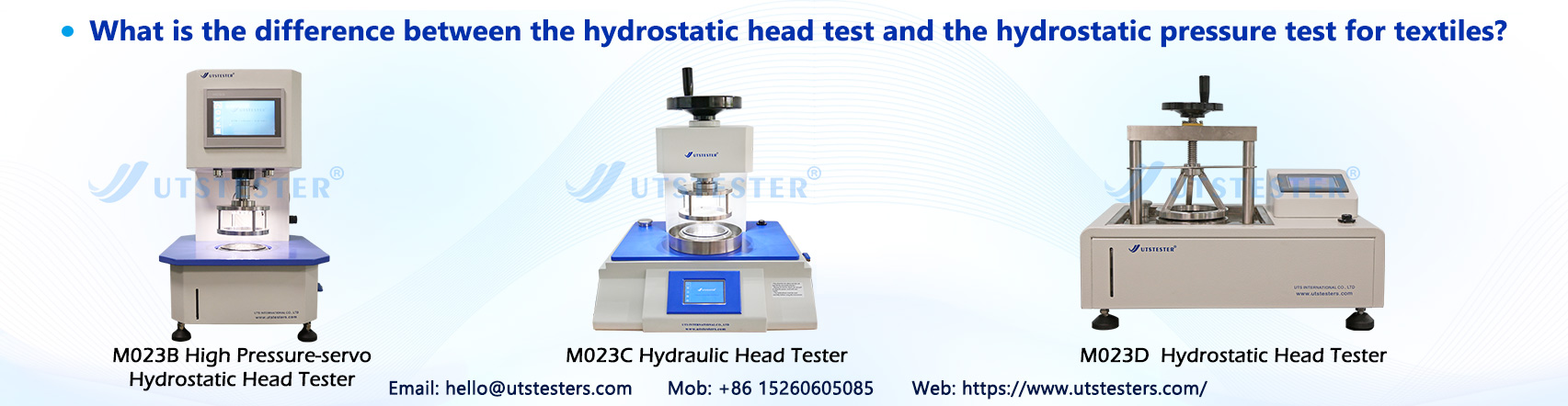
Metric: The maximum height of a water column that the fabric can withstand (expressed in cmH₂O or mmH₂O).
Test Objective: The critical point at which the fabric begins to leak when the water column height reaches a certain value.
Significance: More suitable for describing a material’s “resistance to hydrostatic pressure penetration.”
2. Hydrostatic Pressure Test
Metric: The fabric’s resistance to hydrostatic pressure under sustained pressure conditions.
Test Objective: To evaluate the material’s leak resistance and sustained stability as pressure is maintained or increased.
Significance: Places greater emphasis on the material’s performance under continuous pressure.
II. Differences in Test Principles and Methods
1. Hydrostatic Head Test: Determines the endpoint by gradually increasing the water column height until water seepage or dripping occurs. Suitable for waterproof fabrics and coated fabrics, such as outdoor apparel fabrics, tent fabrics, raincoats, and footwear materials;
2. Hydrostatic Pressure Test: Utilizes a pressure system to apply continuous or stepwise pressure; evaluation is based on reaching a specified pressure or the occurrence of leakage. Suitable for medical protective clothing, industrial protective materials, composite membrane materials, and high-strength waterproof materials.
III. Applicable Standards and Industry Applications
Common Standards
ISO 811: Textiles—Determination of water repellency of fabrics—Hydrostatic pressure test
AATCC 127: Textiles—Water Repellency (Hydrostatic Head Method)
GB/T 4744: Textiles—Determination of Water Repellency—Hydrostatic Head Method
Note: Different standards have varying requirements regarding pressure ramp rates, pass/fail criteria, and sample preparation. Testing must strictly adhere to the provisions of the applicable standard.
IV. Interpretation of Results
Hydrostatic Head Test Results (Examples)
5,000 mmH₂O: Generally indicates moderate water resistance
10,000 mmH₂O or higher: Suitable for scenarios with high water resistance requirements (e.g., mountaineering, extreme outdoor activities)
Hydrostatic Pressure Test Results (Examples)
No leakage at 20 kPa: Indicates that the material maintains excellent protective performance under sustained hydrostatic pressure
V. Recommendations for Enterprise Selection
If fabric grade and water resistance classification are priorities: Prioritize a hydrostatic head tester.
If protective performance and sustained pressure stability are priorities: Prioritize a hydrostatic pressure tester.
If a comprehensive evaluation is required: We recommend configuring a comprehensive hydrostatic pressure testing system that supports multiple standards and modes.
VI. Key Considerations for Instrument Configuration
1. Adjustable pressure ramp rate: To meet the requirements of different standards
2. Stable sample clamping: To prevent edge leakage and false positives
3. Automatic leakage detection: To reduce human error
4. Data storage and report generation: To facilitate quality traceability and audits
5. Unit conversion: mmH₂O / kPa / bar
Conclusion
Although “Hydrostatic Head Testing” and “Hydrostatic Testing” have similar names, their application objectives, methods, and the significance of their results differ. Correctly distinguishing between them and selecting the appropriate testing method not only improves testing efficiency but also ensures product performance and compliance in target markets.
If you wish to select a suitable testing solution based on your company’s products, applicable standards, or customer requirements, please contact the UTSTESTER technical team for professional advice and instrument selection support.
The precision of breathability testing directly relies on specialized testing instruments. High-quality textile testing equipment can simulate various environmental conditions (temperature, humidity, pressure differential) to accurately measure multiple indicators such as air permeability, moisture resistance, and thermal resistance, providing enterprises with comprehensive and reliable performance data.
Digital breathability testers deliver reliable results quickly. They are suitable for breathability testing of various textiles. This includes technical textiles, nonwovens, and other breathable products. It complies with standards such as GB/T5453, GB/T13764, ISO9237, ISO7231, ISO5636, ASTM D737, DIN 53887, JIS L1096, BS5636, and others.
Air flows vertically through the fabric. This creates a pressure difference between the front and back surfaces of the fabric. We measure the airflow rate through the fabric at a set pressure differential. This yields the air permeability value.
Conclusion: Prioritizing Air Permeability Testing to Create Truly “High-Performance Sportswear”
From wear comfort to athletic performance, from health safety to market competitiveness, air permeability is an indispensable core performance characteristic of sportswear. Air permeability testing serves as the “critical link” in ensuring this performance. It not only provides enterprises with precise performance data to support R&D upgrades and quality control but also enables consumers to purchase functional sportswear that genuinely meets their needs.
As a dedicated player in the textile testing instrument field, we remain committed to delivering breathability testing solutions compliant with international and domestic standards. This empowers enterprises to accurately control product breathability performance and enhance their core competitiveness.
But how can an ice storage chiller system be properly applied in a 1,000㎡ cooling area? The answer lies in accurate load calculation, proper system selection, and an optimized operating strategy.
Understanding the Working Principle of Ice Storage Chillers
Ice storage chillers operate based on the latent heat of phase change in ice. During off-peak electricity hours at night, the chiller produces ice and stores cooling energy. During the daytime peak hours, the stored ice melts and releases cooling capacity to meet the building’s air-conditioning demand. This approach provides several advantages: • Reduces electricity costs by using lower off-peak tariffs • Decreases peak-time load on the power grid • Improves energy efficiency of the cooling system As a result, ice storage systems are widely used in commercial buildings, offices, shopping centers, and industrial facilities.
Step 1: Calculate the Cooling Load for a 1000㎡ Area
Accurate cooling load calculation is the first step when designing an ice storage system. Cooling load indicators vary depending on building type: • Office buildings: approximately 100–120 W/㎡ • Commercial buildings: approximately 150–200 W/㎡ due to higher occupancy, lighting, and equipment heat For a 1,000㎡ office building, the estimated cooling load is: 100 kW – 120 kW However, the actual load should also consider: • Building orientation and solar exposure • Insulation performance of the building envelope • Internal heat from equipment and occupants • Local climate conditions Accurate calculations ensure that the chiller capacity and ice storage volume are properly matched.
Step 2: Select the Appropriate Ice Storage Chiller System
Once the cooling load is determined, the next step is equipment selection. For example, if the required cooling load is 100 kW, it is recommended to select a system with slightly higher capacity to provide an operational margin. The ice storage unit capacity must also be designed to cover daytime peak cooling demand. Common types of ice storage systems include: Ice Coil Storage • Faster ice melting rate • Suitable for applications requiring large cooling output within a short time Ice Ball Storage • Higher storage density • Smaller installation footprint The final choice should consider: • Available installation space • Cooling demand profile • Project budget and operational requirements
Step 3: Develop an Effective Operating Strategy
The operational strategy significantly affects system efficiency and cost savings. Two common strategies include: Full Ice Storage All cooling energy is generated and stored during the night, then used during the day. Best suited for: • Areas with very high daytime electricity prices • Facilities with short daytime cooling periods Partial Ice Storage The chiller operates during the day while the stored ice assists with cooling. Benefits include: • Greater flexibility • Ability to adjust based on electricity prices and real-time cooling demand For example: • During peak electricity hours → increase ice melting to provide cooling • During off-peak hours → prioritize ice production This hybrid strategy is commonly used in medium-sized commercial buildings.
Step 4: Ensure Proper Installation and Maintenance
Correct installation and regular maintenance are essential for long-term performance. Installation considerations include: • Proper piping connections • Safe electrical wiring • Compliance with HVAC installation standards Routine maintenance should include: • Monitoring refrigeration pressure and temperature • Inspecting ice storage tanks for leaks • Cleaning system filters regularly • Checking pumps and valves These measures help ensure stable operation and maximum energy efficiency.
Conclusion
For a 1,000㎡ cooling area, an ice storage chiller system can provide an energy-efficient and cost-effective cooling solution. By combining: • Accurate cooling load calculations • Proper equipment selection • Optimized operating strategies • Professional installation and maintenance building owners can achieve lower operating costs, reduced peak electricity demand, and reliable cooling performance. As energy prices continue to rise, ice storage technology offers a smart and sustainable cooling solution for modern buildings.
Thanks to their high heat-exchange efficiency and fast cooling capability, spray-type chillers have become one of the most widely used cooling solutions in dairy processing. However, to meet food-grade production standards, these systems must satisfy several strict technical requirements to avoid product contamination, quality degradation, or production interruptions.
1. Precise Temperature Control and Rapid Cooling
Immediately after milking, fresh milk must be cooled from approximately 37 °C to below 4 °C within two hours. Rapid cooling prevents the growth of microorganisms such as E. coli and lactic acid bacteria, preserving both nutritional value and flavor. To achieve this, spray-type chillers must provide: • High refrigeration capacity for fast temperature reduction • Uniform heat exchange through a spray cooling system • Temperature control accuracy within ±0.5 °C During operation, the chiller should dynamically adjust its cooling output: • Initial stage: deliver higher cooling capacity for rapid temperature drop • Final stage: precisely maintain the target temperature This prevents overcooling that could cause milk freezing, which may damage milk fat structures and negatively affect product quality.
2. Food-Grade Hygiene and Safety Standards
Hygiene is a non-negotiable requirement in dairy processing. Even though spray chillers usually cool the medium indirectly, contamination in the cooling circuit can still affect product safety. To meet food-grade standards, spray-type chillers should include: • 316L food-grade stainless steel piping and heat exchange components • Smooth internal surfaces without dead corners to prevent bacterial growth • No risk of heavy metal contamination • A fully enclosed spray and water circulation system to prevent dust or microbial contamination In addition, the system must support CIP (Clean-In-Place) cleaning processes, allowing: • Acid and alkaline cleaning cycles • High-temperature sterilization • Complete removal of residues inside pipes This ensures compliance with hygiene regulations such as GB 14881 – General Hygienic Regulation for Food Production.
3. Anti-Scaling and Corrosion-Resistant Design
During milk cooling, the cooling medium—usually clean water or food-grade coolant—may produce mineral scale due to temperature fluctuations. Scale accumulation on spray nozzles and heat exchanger surfaces can significantly reduce heat transfer efficiency or even cause blockages. Therefore, spray-type chillers should feature: • Anti-clogging spray nozzles • Optimized spray distribution structure • Water softening and filtration systems to minimize scale formation In cases where acidic cooling fluids are used, the chiller must also provide: • Corrosion-resistant housings and pipelines • Passivated welding seams to form protective layers • Long-term structural stability against corrosion
4. High Operational Stability for Continuous Production
Most dairy processing plants operate 24/7 continuous production, meaning any cooling system failure could lead to large losses of raw milk. To ensure reliable operation, spray chillers should include: • High-reliability compressors and pumps designed for frequent start-stop cycles • Intelligent fault detection and alarm systems • Real-time monitoring of temperature, pressure, and flow If abnormalities occur, the system should automatically trigger alarms or switch to backup modes to prevent production disruption. Additionally, dairy processing facilities require low environmental interference: • Operating noise below 85 dB • Minimal vibration to protect nearby precision inspection equipment • Secure pipeline connections to prevent leakage caused by vibration
5. Energy Efficiency and Adaptability to Variable Loads
Milk cooling demand often varies depending on production batches and ambient temperature. Spray-type chillers should therefore support variable load operation, typically through frequency conversion technology. Benefits include: • Adjusting cooling capacity according to real-time demand • Avoiding energy waste from oversized equipment • Reducing long-term operating costs Environmental adaptability is also essential: • Low-temperature start-up capability for northern regions in winter • Anti-freezing protection for pipelines • Optimized condenser performance for stable operation during high summer temperatures
Conclusion
A spray-type chiller designed for milk cooling must focus on precise temperature control, hygienic safety, and long-term operational stability, while also delivering energy efficiency and adaptability to varying operating conditions. When these requirements are fully met, dairy producers can ensure rapid and safe milk cooling, maintain consistent product quality, and achieve reliable, high-efficiency production in modern dairy processing facilities.
Scroll chillers use less energy. This helps you save money each month. They give steady cooling that you can count on.
These chillers use refrigerants that are good for the environment. This lowers your carbon footprint. It helps you reach environmental goals.
Scroll chillers have fewer parts that move. This means you pay less for maintenance. There are fewer chances for them to break down.
Their small size makes them easy to install. They fit well in tight spaces. This makes them great for many places.
The controls are easy to use. You can run scroll chillers without trouble. This makes managing your cooling system simple.
Energy Efficiency of Scroll Chillers
Lower Operating Costs
You want to save money on your building’s energy bills. Scroll chillers help you do that. These chillers use a special design that gives you high efficiency and steady performance. You get more cooling with less power. This means you spend less each month.
Scroll chillers reach over 95% volumetric efficiency. Their continuous compression process keeps gas from leaking out, so you get more cooling for every dollar you spend.
The coefficient of performance (COP) for scroll chillers is 10 to 15 percent higher than what you get from reciprocating chillers. You get more cooling output for the same amount of energy.
When your building does not need full cooling, scroll chillers still work well. At partial loads, they can reach an energy efficiency ratio (EER) of 4.2 to 4.8. Reciprocating chillers usually stay below 4.0.
Scroll chillers support frequency conversion. This means they adjust their output to match your needs. You avoid wasting energy when you do not need full power.
The simple structure of scroll chillers means you pay 15% to 20% less for yearly maintenance compared to reciprocating chillers.
You can see these savings in real-world products. For example, the Lennox Powered by Samsung Varix modular heat-pump chiller has an EER rating of up to 11.54. The Daikin Applied Trailblazer AGZ-F air-cooled scroll chiller reaches an EER of up to 11.13 and an IPLV rating of up to 17. These numbers show you how much energy efficiency you can expect.
Tip: When you choose scroll chillers, you lower your operating costs and get reliable cooling all year long.
Eco-Friendly Cooling
You care about the environment. Scroll chillers help you protect it. Many chillers now use new refrigerants that have a much lower impact on the planet. Older chillers used R-410A, which has a high global warming potential (GWP). Newer scroll chillers use R-32 and R-454B. These refrigerants have much lower GWP values. R-32 has a GWP of 675, and R-454B drops even lower to 467. This change means you help reduce greenhouse gas emissions.
Carrier, a leading brand, chose R-32 for its commercial scroll chillers. This move cuts the refrigerant carbon footprint by 80% compared to older systems. You get high efficiency and strong cooling, but you also help the planet.
Here is how scroll chillers compare in large buildings:
You can trust scroll chillers to give you energy efficiency and eco-friendly cooling. You save money, use less energy, and help the environment at the same time.
Reliability and Low Maintenance
Fewer Moving Parts
You want a cooling system that works when you need it. Scroll chillers give you that peace of mind. These chillers use a simple design with fewer moving parts than other types. This means less can go wrong. You do not have to worry about frequent breakdowns or complicated repairs.
You get easy maintenance because the scroll compressor has fewer parts to wear out. You save time and money on service calls. Compared to screw chillers, you spend less on upkeep. Screw chillers have a complex design, so they need more attention and cost more to maintain. With scroll chillers, you enjoy reliable operation and fewer surprises.
Here is how different chillers compare for maintenance and lifespan:
Scroll chillers need minimal maintenance.
Screw chillers require more frequent and costly service.
Tip: Choose scroll chillers if you want a system that runs smoothly and keeps maintenance simple.
Consistent Temperature Control
You want steady cooling in every season. Scroll chillers deliver this with ease. Their design keeps the temperature stable, even when your building’s needs change. You do not have to worry about hot spots or sudden drops in cooling.
Scroll chillers adjust quickly to changes in demand. This means your equipment, products, or people stay comfortable and safe. You get reliable operation in all conditions, from hot summer days to cooler months. When you pick scroll chillers, you choose a system that keeps your space at the right temperature, every time.
Quiet and Compact Chiller Design
Noise Reduction Benefits
You want your space to be calm and quiet. Scroll chillers help you keep things peaceful. These chillers do not make much noise when they run. You will not hear loud machines in your office or school. Small scroll chillers make about 50 to 60 decibels of noise. This is as loud as people talking. Bigger scroll chillers for factories are still not very loud. They make about 70 to 80 decibels of noise. This is quieter than many other chillers.
Scroll chillers are better than reciprocating chillers for noise. They have fewer moving parts, so they do not shake or make extra sounds. This makes them great for places where quiet is important.
Chiller Type
Noise Level (dB)
Scroll Chiller
Generally quieter due to fewer moving parts and smoother operation
Reciprocating Chiller
Higher mechanical noise and vibration due to more moving parts
Scroll chillers work well in places that need quiet.
You get cool air without loud noises from machines.
Tip: Pick scroll chillers if you want a quiet and cool place to work.
Space-Saving Installation
Sometimes you do not have much room for big machines. Scroll chillers are small and fit in tight spaces. You can put them in small rooms, on rooftops, or in corners. They do not need a lot of space.
Scroll chillers are small, so they fit where space is tight.
Screw chillers are bigger and used for heavy jobs.
Scroll chillers have a simple design with fewer parts to fix.
You save space and keep your building neat. There is less mess and more room for other things. You also do not have to fix them often because they are simple and strong.
Note: A small chiller gives you more space for other equipment and helps keep things tidy.
When you choose scroll chillers, you get quiet cooling and save space. Your building is more comfortable and works better with this smart choice.
Easy Setup and User-Friendly Controls
Simple Installation
You want a system that is quick to set up. Scroll chillers are easy to install. They are small, so you can put them in tight spots. You do not need big machines or hard steps. Most scroll chillers come ready to use, so you can start cooling fast.
When you put in chillers, you might have some problems. Here are the main ones:
New technology can change how much installation costs and what you need to do.
You need trained workers to keep the system working well.
Your team needs training for an easy setup.
You can stop delays by picking chillers with clear guides and help. Many brands give you training and instructions for your team. This helps you get your cooling system running with less worry.
Tip: Pick scroll chillers for a quick and easy setup. You save time and money right away.
Intuitive Operation
You want to use your chillers without any trouble. Scroll chillers have controls that are simple to use. You can check and change settings from anywhere. The dashboard shows important info with easy-to-read widgets. Four access levels keep your system safe and simple to handle.
You also get features like alarm logs, backup restore, and live checks. These tools help you find problems early and keep cooling steady. The programming tools are easy, so anyone on your team can use them. You get lots of help with guides and training.
Here is how scroll chillers and screw chillers compare for controls and upkeep:
Feature
Scroll Chillers
Screw Chillers
Control Complexity
Lower complexity
Higher complexity
Maintenance Frequency
Less frequent needed
More frequent required
Cost
Generally lower costs
Higher costs
You get a system that is simple to use and take care of. Scroll chillers help your building run well and keep cooling steady. Make the smart choice and enjoy easy, stress-free cooling.
Scroll Chillers vs. Other Chillers
Scroll vs. Screw Chillers
You want good cooling for your building. Both scroll chillers and screw chillers work well. But scroll chillers have some clear benefits. Look at this table to see how they are different:
Aspect
Screw Chiller
Scroll Chiller
Efficiency
0.5 kW/ton
0.6 kW/ton
Capacity Range
100-2,000 tons
10-200 tons
Noise Level
Low
Moderate
Initial Cost
Higher
Lower
Maintenance Needs
Moderate
Low
Scroll chillers cost less to buy and fix. You save money now and later. Screw chillers are best for very big buildings. Scroll chillers fit better in smaller places. You get steady cooling and do not pay extra.
Tip: Pick scroll chillers if you want lower costs and easy care for small or medium buildings.
Scroll vs. Reciprocating Chillers
You want to save energy and have smooth cooling. Scroll chillers are better than reciprocating chillers in many ways:
Scroll chillers have a Coefficient of Performance (COP) from 4.9 to 5.9. You get more cooling with less energy.
Scroll chillers work well from 20 to 200 tons. You can use them in many places.
Scroll compressors run smoother than reciprocating ones. You get less shaking and more steady cooling.
Scroll chillers need less fixing. You spend less time and money on repairs.
Scroll chillers are small and strong. They fit in tight spots and keep your building cool.
Scroll chillers give you better efficiency and are easier to use. Reciprocating chillers do not work as well for small loads.
Best Applications for Scroll Chillers
You want chillers that match your needs. Scroll chillers work great in many places:
Variable speed scroll chillers are good for offices, schools, and stores. You get flexible cooling and easy control with building systems.
Scroll chillers are great for data centers. They keep equipment safe with steady cooling and save energy.
Factories use scroll chillers for strong and efficient cooling. You get good performance and low upkeep.
Data centers need high-efficiency cooling. Scroll chillers keep servers safe and energy bills low.
Malls and office buildings use scroll chillers for air conditioning. You get comfort and help the environment.
Data centers like scroll chillers because they control temperature well and are easy to check.
You get the best results when you pick scroll chillers for data centers, commercial buildings, and factories. They are flexible and efficient, so they are a smart choice for many uses.
You want a cooling system that is smart and easy to use. Scroll chillers are special because they give you:
Quiet and smooth running with less parts that move
Better energy use and speeds that can change
Reliable cooling for any kind of place
You help the earth when you pick a system that uses less energy and makes less pollution. More people are choosing scroll chillers, so the market is getting bigger. Make a good choice. Choose scroll chillers for simple, steady, and earth-friendly cooling.
FAQ
What makes scroll chillers better than other cooling systems?
You get higher efficiency, quieter operation, and lower maintenance. Scroll chillers use fewer moving parts. You save money and enjoy steady cooling. Choose scroll chillers for a smart upgrade.
Can I use scroll chillers in small spaces?
Yes! Scroll chillers have a compact design. You can fit them in tight spots, rooftops, or corners. You keep your building neat and save valuable space.
How do scroll chillers help the environment?
You help the planet by choosing scroll chillers. They use eco-friendly refrigerants and consume less energy. This reduces your carbon footprint and supports green building goals.
Are scroll chillers easy to control?
You get user-friendly controls with scroll chillers. The dashboard is simple. You can check and adjust settings quickly. This makes operation stress-free for you and your team.
How long do scroll chillers last?
Scroll chillers last many years with proper care. You enjoy reliable performance and fewer breakdowns. Regular maintenance keeps your system running smoothly.