When choosing an extruder for PVC flooring production, one of the first questions manufacturers face is whether a single-screw or twin-screw extruder is the better option. Both designs can process thermoplastic materials, but they differ in how they convey, mix, and plasticize the material. The right choice depends on the PVC formulation, filler content, required output, and the quality standards of the finished flooring.
For manufacturers producing stone plastic composite (SPC), luxury vinyl tile (LVT), or other PVC-based flooring sheets, the decision should be based on the complete production process rather than the extruder alone. SKY WIN specializes in plastic extrusion equipment, including flooring production lines using conical twin-screw extruders. Understanding the practical differences between the two screw configurations can help buyers evaluate equipment more effectively and avoid investing in a machine that does not match their production requirements.
What Is the Difference Between Single-Screw and Twin-Screw Extruders?
The main difference is the number and arrangement of screws inside the extruder barrel. A single-screw extruder uses one rotating screw to convey, melt, and push material through the extrusion die. A twin-screw extruder uses two interacting screws, which can provide additional control over conveying, mixing, and plasticization depending on the screw design.
Single-screw extruders are widely used in plastic processing applications where the material can be processed effectively with a relatively straightforward conveying and melting process. Twin-screw extruders are often selected when material mixing, formulation flexibility, or the processing of filled compounds requires a more specialized screw configuration.
For PVC flooring, the distinction matters because the raw material is often a compound rather than pure PVC resin. Formulations may contain calcium carbonate, stabilizers, lubricants, pigments, plasticizers, and other additives. The extruder needs to process these ingredients consistently to support stable sheet formation and the required finished product properties.
Neither design is automatically superior for every application. The important question is whether the selected extruder can process your specific formulation at the required output while maintaining stable production conditions.
How a Single-Screw Extruder Performs in PVC Processing
A single-screw extruder conveys material along one screw channel while heat and mechanical energy help melt and process the polymer. The material then passes through an extrusion die to form a continuous profile, sheet, or other product.
Single-screw systems can be suitable for PVC applications when the screw geometry, feeding system, temperature control, and formulation are properly matched. They are commonly considered for processes involving established material formulations and relatively straightforward extrusion requirements.
When evaluating a single-screw extruder for flooring production, buyers should examine the following factors:
- Material compatibility: Confirm that the screw design can process the intended PVC compound and additive package.
- Mixing requirements: Determine whether the screw provides sufficient distributive and dispersive mixing for the formulation.
- Output stability: Check whether the machine can maintain consistent material delivery at the required production rate.
- Temperature control: Ensure that the heating and cooling arrangement supports the processing window of the PVC compound.
- Maintenance costs: Consider screw and barrel wear, spare parts, and routine servicing.
A single-screw extruder may be a reasonable choice for a suitable PVC application, but its suitability for high-filler rigid flooring compounds should be established through technical evaluation and processing trials rather than assumed from the machine type alone.
Why Twin-Screw Extruders Are Commonly Used for SPC Flooring
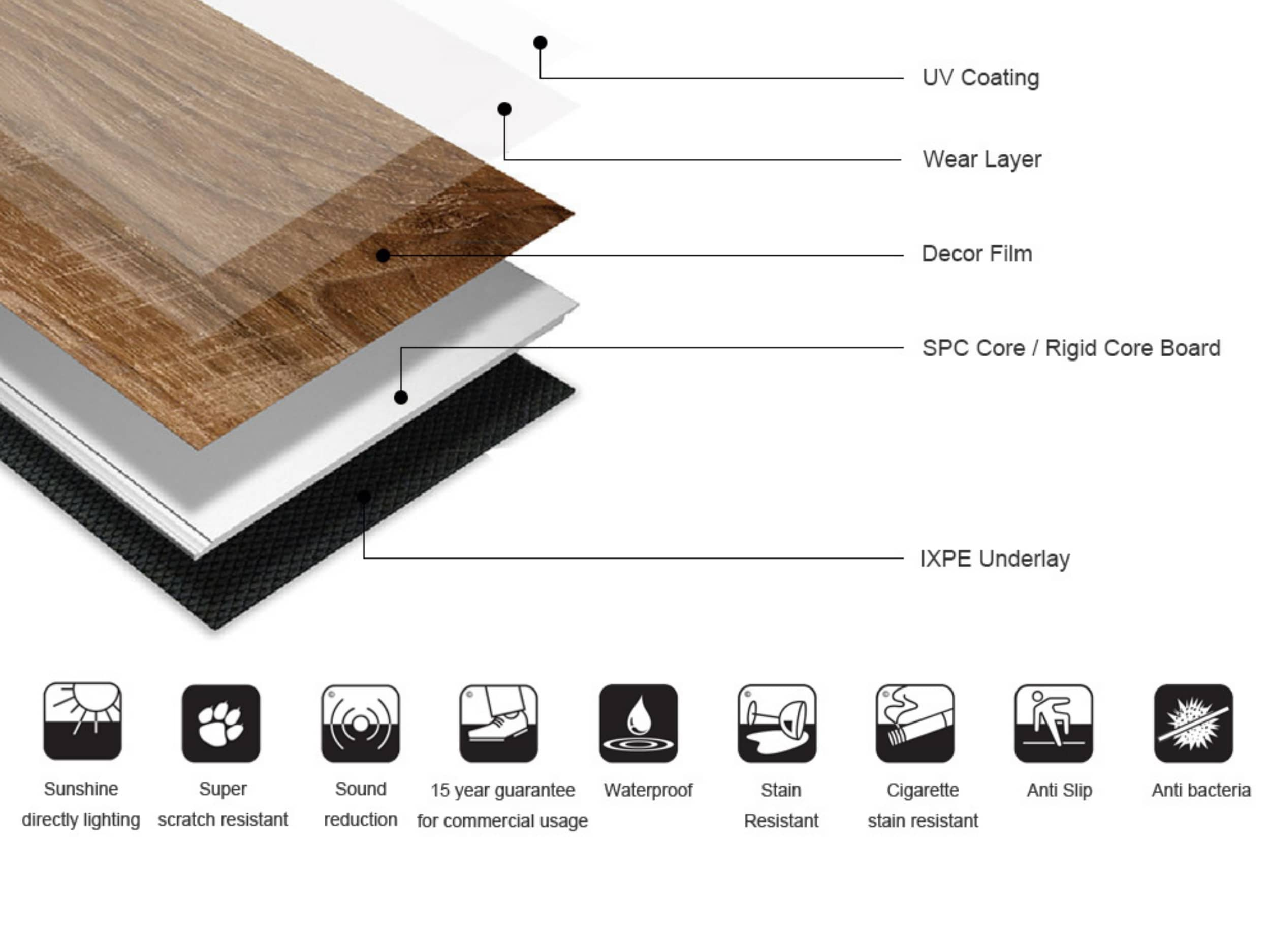
SPC flooring typically uses PVC resin, calcium carbonate, stabilizers, and other processing additives to form a rigid composite core. The relatively high mineral filler content makes material feeding, mixing, plasticization, and wear resistance important considerations during extrusion.
A twin-screw extruder can provide more options for controlling material conveying and mixing than a conventional single-screw design. However, performance depends on whether the screws are intermeshing or non-intermeshing, their rotation direction, geometry, clearance, speed, and the overall machine configuration.
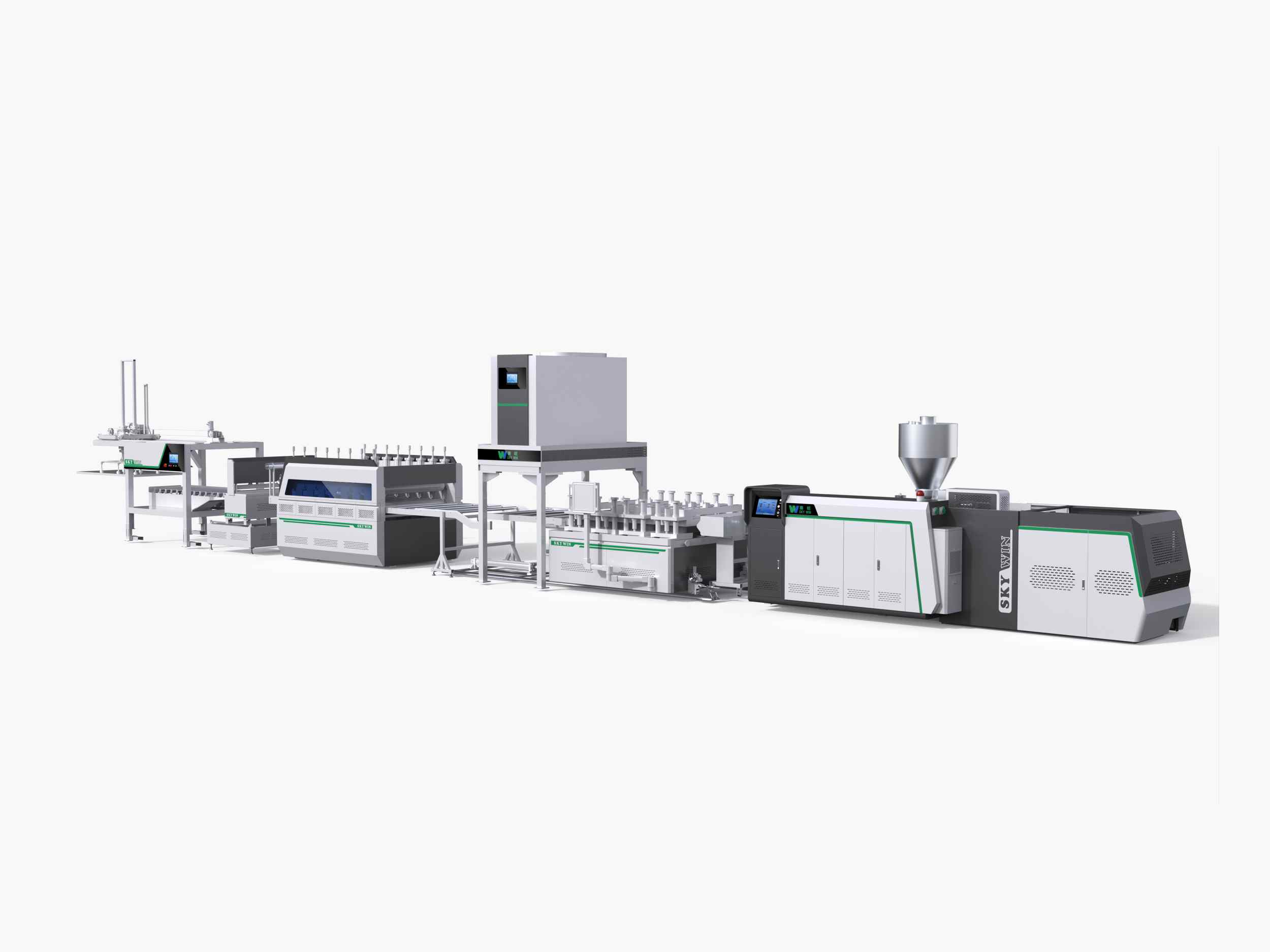
For rigid PVC flooring compounds, a conical twin-screw configuration is a common equipment choice. SKY WIN's SPC/PVC Flooring Sheet Extrusion Line uses a high-torque conical twin-screw extruder designed for mixing, plasticizing, and continuously extruding flooring composite materials. The product specifications list PVC resin and calcium carbonate as raw materials.
When comparing twin-screw extruders for SPC production, focus on the following points:
- Mixing and plasticization: The machine should process the formulation consistently before the material reaches the die.
- Screw torque and drive capacity: The drive system must suit the formulation and required production rate.
- Thermal control: Stable temperature management helps reduce processing fluctuations and the risk of PVC degradation.
- Wear resistance: Mineral fillers can increase abrasion, making screw and barrel materials important to long-term operating costs.
- Continuous output: The extruder must deliver material at a rate that downstream calendering and cooling equipment can handle.
For buyers producing rigid flooring sheets with mineral-filled PVC compounds, these factors are more useful for equipment selection than screw count alone.
Single-Screw vs. Twin-Screw Extruders: Key Differences
The following comparison provides a starting point for manufacturers evaluating extrusion equipment. Actual performance depends on the machine design, material formulation, operating conditions, and product requirements.
| Comparison Factor | Single-Screw Extruder | Twin-Screw Extruder |
|---|---|---|
| Screw configuration | One screw | Two interacting screws |
| Material mixing | Depends on screw design and mixing elements | Can provide enhanced control of conveying and mixing, depending on configuration |
| Filled PVC compounds | Suitability must be confirmed for the formulation | Often considered for rigid, mineral-filled PVC formulations |
| Equipment complexity | Generally simpler screw arrangement | More complex screw and drive configuration |
| Investment and maintenance | Depends on machine size, components, and application | May involve higher equipment complexity and maintenance requirements |
| Typical selection priority | Suitable material processing and cost-effective operation | Formulation control, mixing, and processing stability |
The comparison should not be treated as a universal performance ranking. For example, a well-designed single-screw extruder may outperform an unsuitable twin-screw machine in a particular application. Buyers should compare actual production data, material compatibility, and finished sheet quality under equivalent conditions.
Which Extruder Is Better for SPC, LVT, and WPC Flooring?
The answer depends on the flooring type and the structure of the finished product. SPC, LVT, and WPC are not interchangeable formulations, and their processing requirements can vary substantially.
SPC flooring: SPC uses a rigid PVC-based composite core that commonly contains calcium carbonate. A conical twin-screw extruder is a common option because its configuration is designed for processing PVC compounds with mineral fillers. Buyers should confirm the required filler loading, sheet thickness, output, and wear protection.
LVT flooring: LVT formulations and product structures vary. Flexible LVT, rigid LVT, and multi-layer products may require different processing and finishing arrangements. The extruder must be matched to the formulation, sheet thickness, calendering system, and lamination requirements.
WPC flooring: Wood-plastic composite formulations may contain wood flour or other wood-based fillers in addition to polymer and additives. Moisture management, feeding behavior, thermal sensitivity, and screw configuration require careful evaluation.
For manufacturers focused on LVT production, SKY WIN's LVT Flooring High-speed Extrusion Line uses a twin conical screw configuration and integrates extrusion, calendering, and lamination technologies. The product page also describes options for embossing and online thickness control.
The practical takeaway is to select the extruder based on the complete flooring formulation and production process. Do not choose a machine simply because its screw configuration is popular in another flooring application.
How Screw Design Affects Flooring Sheet Quality
The extruder plays an important role in preparing a consistent melt, but it does not determine the entire quality of the finished flooring sheet. Die design, calendering, cooling, material preparation, and line synchronization also influence the final result.
When the material is not mixed or plasticized consistently, manufacturers may experience unstable extrusion, surface irregularities, or sheet thickness variations. These symptoms can also result from incorrect temperature settings, uneven feeding, unsuitable die conditions, or problems in the downstream equipment.
To evaluate an extruder's contribution to product quality, manufacturers should check:
- Whether the PVC compound is consistently mixed and plasticized.
- Whether material flow through the die remains stable during continuous operation.
- Whether the sheet meets the specified thickness and width tolerances.
- Whether the cooling and calendering sections maintain dimensional stability.
- Whether the machine can run the intended formulation without excessive processing temperatures or frequent stoppages.
Ask the supplier to explain the recommended operating window and the conditions used to establish the quoted production capacity. If possible, evaluate samples produced with your actual formulation rather than relying solely on general equipment specifications.
Consider the Complete Production Line, Not Just the Extruder
A flooring extrusion line includes several connected stages. The extruder prepares and delivers the material, the die forms the sheet, the calendering system controls thickness and surface finish, and the cooling and cutting equipment help prepare the sheet for subsequent processing.
For manufacturers producing flooring base sheets, SKY WIN's PVC/WPC Flooring Base Material Extrusion Line integrates mixing, extrusion, calendering, cooling, and cutting. Its listed configuration uses a conical twin-screw extruder and is intended for base-layer production for SPC, WPC, and LVT flooring.
When comparing complete production lines, confirm which equipment is included and whether optional functions such as online lamination or embossing are required. The extruder's rated output should also be compatible with the capacity of the downstream equipment.
A machine with a high theoretical output may not achieve the expected finished-product output if cooling, calendering, or cutting becomes a bottleneck. Evaluating the complete line helps buyers compare equipment on the basis of actual production requirements rather than isolated specifications.
How to Choose the Right Extruder for Your Factory
Before selecting a single-screw or twin-screw extruder, prepare a clear production specification. This allows the equipment supplier to recommend a configuration based on the actual application rather than general assumptions.
Use the following checklist when requesting quotations:
- Finished flooring type: Identify whether you will produce SPC, LVT, WPC, or another PVC-based product.
- Material formulation: Provide the main ingredients, filler content, additives, and any formulation constraints.
- Sheet dimensions: Specify the required width, thickness, and dimensional tolerances.
- Target output: Define the required production rate under the intended operating conditions.
- Quality requirements: Explain the requirements for surface finish, thickness consistency, and dimensional stability.
- Downstream equipment: Confirm the die, calendering, cooling, lamination, and cutting configuration.
- Operating costs: Compare energy consumption, wear parts, maintenance, and expected downtime.
- Technical support: Check commissioning, operator training, spare parts, and after-sales service.
The best choice is the machine that consistently processes your formulation, meets your production targets, and fits your total operating budget. For PVC flooring manufacturers, a technically suitable twin-screw system may offer advantages in processing filled compounds, but the final selection should always be supported by application-specific specifications and supplier confirmation.
Frequently Asked Questions About Single-Screw and Twin-Screw Extruders
What is the main difference between a single-screw and a twin-screw extruder?
A single-screw extruder uses one rotating screw to convey and process material, while a twin-screw extruder uses two interacting screws. Depending on the design, a twin-screw system can provide additional control over material conveying and mixing. The best choice depends on the formulation and production requirements.
Why are twin-screw extruders commonly used for SPC flooring?
SPC compounds commonly contain PVC resin, calcium carbonate, stabilizers, and other additives. A suitably designed twin-screw extruder can provide the mixing and plasticization required for these filled PVC compounds. The exact performance depends on screw geometry, torque, temperature control, and material formulation.
Can a single-screw extruder process PVC flooring materials?
Yes, single-screw extruders can process suitable PVC materials when the screw design, formulation, and operating conditions are compatible. For rigid flooring compounds with high mineral filler content, manufacturers should verify processing stability, mixing performance, and achievable output before choosing a machine.
Does a twin-screw extruder always produce better flooring sheets?
No. Sheet quality depends on the complete production process, including material preparation, extrusion, die design, calendering, cooling, and cutting. A suitable machine configuration and properly controlled operating conditions matter more than screw count alone.
Which factors should I compare when buying a PVC flooring extruder?
Compare material compatibility, screw configuration, expected output, sheet dimensions, temperature control, wear resistance, downstream equipment, energy consumption, maintenance costs, and technical support. Request specifications based on your actual formulation and production targets.
Should I select the extruder based on maximum output alone?
No. Maximum rated output may differ from the achievable rate for your formulation, sheet thickness, and quality requirements. Confirm the expected production rate under defined operating conditions and ensure that the downstream equipment can handle the same output.
Choosing between a single-screw and twin-screw extruder starts with understanding your material and finished flooring requirements. By comparing screw design, processing stability, output capacity, sheet quality, and complete line configuration, manufacturers can make a more informed investment decision for long-term PVC flooring production.