dyyseo
industrial chiller price

What should we consider when buy an industrial Chiller

Compared to HVAC chillers, the selection of industrial chillers is more complex. This is because industrial chillers operate under complex conditions, and each user has different temperature requirements and installation environments. Industrial chillers aim to provide stable, precise, and large temperature differences to meet process requirements, with control systems focusing more on process integration and safety; while air conditioning units aim to provide comfort, wide-range variable frequency operation, and high energy efficiency for human living environments, with control systems focusing more on intelligent regulation and energy optimization.


When you need to purchase an industrial chiller, simply considering the industrial chiller price is completely insufficient. Comparing the chiller prices of different chiller manufacturers for a single model is also not an effective way to select the right industrial chiller. When purchasing an industrial chiller, you need to consider various factors comprehensively, including technical parameters, operating conditions, required outlet water temperature, the highest ambient temperature in summer, the matching size and materials of the condenser and evaporator, service support, and the price of the chiller.
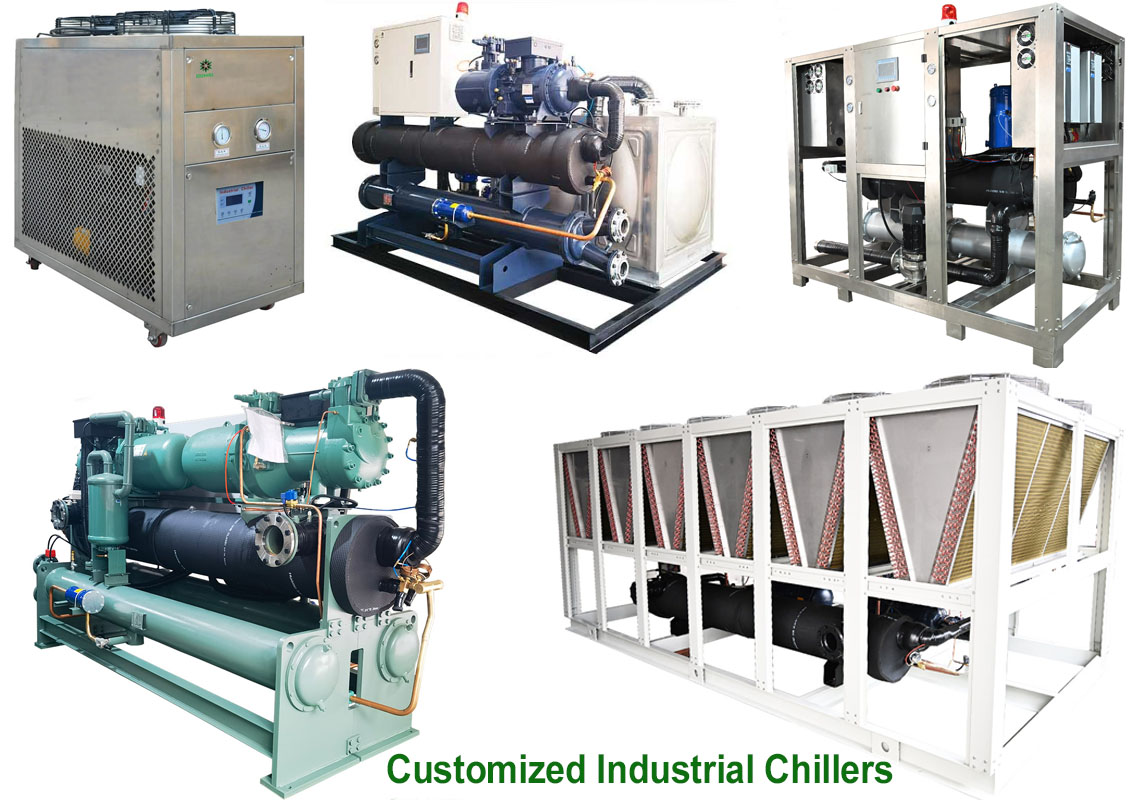

customized industrial chillers


Clearly define core process parameters: First, accurately determine the cooling capacity, temperature control accuracy, and cooling medium. The cooling capacity should be calculated based on equipment heat generation, environmental heat dissipation, etc., with a 10%-20% margin. Temperature accuracy should be selected according to the application scenario; for example, high-precision electronic manufacturing requires ±0.1℃, while general industrial cooling can use ±1℃-±2℃. Regarding the cooling medium, water is low-cost and has high heat transfer efficiency, suitable for conventional cooling, while ethylene glycol solution has a low freezing point and is suitable for low-temperature or anti-freeze applications. If a low-temperature chiller is needed, and an ethylene glycol chiller is required, if the budget allows, it is recommended to use a stainless steel evaporator to effectively extend the service life of the glycol chiller.


Evaluate environmental and installation conditions: The installation environment directly affects equipment selection.  Consider the space size, ventilation conditions, temperature and humidity range, and whether there are corrosive or explosion-proof requirements; indoor installation requires attention to high temperatures and dust, and may require the addition of filters or heaters; outdoor installation requires adaptation to extreme temperature differences; sufficient maintenance space should also be reserved, and the power supply should be checked for compatibility. If water sources are scarce and the water quality is poor, an air-cooled chiller is recommended.  Is the cooling medium corrosive? Is it fresh water or seawater? If it is corrosive, you must inform the chiller manufacturer so that corrosion-resistant materials can be used to ensure that the chiller evaporator is not corroded, as conventional industrial chillers use copper tubes in their evaporators.


Focus on energy efficiency and operating economics: The Coefficient of Performance (COP) is a key indicator; high-efficiency equipment can significantly reduce long-term operating costs. Water-cooled units have a high cooling coefficient but require a larger initial investment, while air-cooled units are easier to install but consume more energy.  A balance must be struck based on water source conditions and electricity prices. Modular design supports phased expansion, avoiding wasted initial investment.  The choice between single-compressor and dual-compressor systems for screw chillers is also a common concern during chiller procurement. If the budget allows, a dual-compressor system is recommended, as the compressors adjust according to the load, saving energy.


Verify technical performance and reliability: The brand and quality of core components such as compressors and condensers directly affect stability. Prioritize first-tier brand components and confirm that complete safety protection functions are in place. For complex operating conditions (such as pharmaceuticals and chemicals), verify whether the supplier has successful cases in the same industry and pay attention to whether the control logic supports intelligent adjustment. Predictive maintenance functions (such as vibration monitoring) can reduce downtime. Oumal chillers use international top-brand compressors, such as Copeland, Danfoss, and Panasonic for scroll compressors, and Hanbell, Bitzer, and Refcomp for screw compressors.


In short, when purchasing industrial chillers, avoid simply comparing prices.  Consider the different configurations offered by different chiller suppliers and whether the industrial chiller matches the required operating conditions. Oumal Refrigeration has a professional team of engineers to provide you with professional chiller solutions. For chiller purchases, please contact OumalChiller: oumal@oumal.com.
阅读全文......

Choosing the Right 20 Ton Industrial Chiller

As industrial production continues to grow, the demand for cooling equipment has become increasingly essential. Industrial chillers have become indispensable in industries such as manufacturing, chemicals, food processing, and more. Among the various chiller models, the 20 ton chiller stands out for its versatility, high cooling capacity, and energy efficiency, making it the top choice for many companies. So, how do you choose the right 20-ton industrial chiller, and what is the price trend? These are important questions for businesses to consider before making a purchase.


A 20 ton industrial chiller is typically used in scenarios where large-scale and continuous cooling is required, such as precision machining, laboratory equipment cooling, laser cutting, plastic injection molding, and other industries. Its cooling capacity is generally between 70-80 kW, which can meet the cooling demands of most medium to large industrial facilities.


Additionally, a 20 ton chiller generally has the following features:


High Efficiency: Excellent cooling performance, capable of rapidly lowering equipment temperatures to ensure uninterrupted production.

Energy-Saving and Eco-Friendly: Utilizes advanced compressor and refrigerant technology to provide high energy efficiency, helping companies save on energy costs.

Durability: Designed for industrial-grade use, the chiller can operate reliably in harsh environments, reducing the likelihood of failure and extending the equipment’s lifespan.

Multi-Functionality: In addition to basic cooling, some high-end models also offer heating and dehumidification functions, providing a more flexible solution.


How to Choose the Right 20 Ton Chiller


Define Your Needs: Consider the cooling requirements of your production process, the available space, and your energy efficiency demands when choosing the right equipment. For industries requiring precise temperature control, such as precision manufacturing, high-efficiency, and stable chillers may be more appropriate.

Select a Reliable Brand: such as oumalchiller Choose a brand with a good reputation in the market and a robust service network. This ensures equipment quality and after-sales support, minimizing the risk of downtime.

Consider After-Sales Service: Industrial chillers have a long lifespan, and regular maintenance is crucial. It is important to choose a supplier with a comprehensive after-sales service system to ensure the equipment operates smoothly over time.


As a critical cooling solution for medium and large enterprises, a 20-ton industrial chiller's price is influenced by several factors. When making a purchase, businesses should not only consider the initial cost of the equipment but also assess its energy efficiency, durability, and after-sales support. Selecting the right chiller will not only improve production efficiency, reduce energy consumption, but also extend the equipment's service life, bringing long-term economic benefits to the company.

Whether you’re looking for an economy model or a high-end unit, understanding market price trends and technical specifications is key to making an informed decision. If you're in the process of purchasing, it’s recommended to consult with professional manufacturers to find the best solution tailored to your company’s needs.

阅读全文......

How to Address Water Quality Issues in Industrial Water Chillers

Industrial water chillers are essential for cooling systems in industries like manufacturing, food processing, and pharmaceuticals. However, poor water quality can negatively affect their performance, efficiency, and lifespan. Here’s how to tackle common water quality issues in industrial water chillers.


Common Water Quality Problems

1. Scaling

Scale buildup occurs when minerals like calcium and magnesium deposit on heat exchange surfaces. This reduces heat transfer efficiency and forces the chiller to work harder, increasing energy consumption and maintenance needs.


2. Corrosion

Corrosion happens when impurities like oxygen react with metal parts in the chiller, leading to rust and equipment damage. This weakens the system, causing leaks and mechanical failures.


3. Biofouling

Microorganisms, such as algae and bacteria, can grow inside the chiller system, clogging pipes and reducing cooling efficiency. Biofouling also creates a breeding ground for harmful pathogens.


4. Turbidity and Sediment

Suspended particles and sediment can clog filters, reduce water flow, and damage system components, impacting overall performance.


Solutions to Improve Water Quality

1. Filtration

Install quality filters to remove particles and keep water clear. Regularly clean and replace filters to ensure proper flow and prevent sediment buildup.


2. Water Softening

Use water softeners to remove hardness-causing minerals, preventing scale buildup on heat exchange surfaces and maintaining cooling efficiency.


3. Corrosion Inhibitors

Add corrosion inhibitors to create a protective layer on metal parts, preventing rust and extending the life of the chiller.


4. Chemical Treatment

Regularly treat water with biocides and algaecides to control microbial growth and biofouling.


5. Descaling Solutions

Use descaling chemicals or mechanical cleaning methods to remove existing scale deposits and restore heat exchange efficiency.


3. Routine Maintenance

Regularly monitor water quality parameters such as pH and mineral content. Schedule routine maintenance checks to address potential issues early and avoid costly repairs.


Selecting the Right Chiller

When purchasing an industrial water chiller, consider factors like industrial chiller price, energy efficiency, and water quality compatibility. A tailored industrial process chiller designed for specific water conditions may save on long-term maintenance costs and improve overall performance.

阅读全文......

What is a 10 HP Air to Water Cooled Chiller?

A 10 HP Air to Water Cooled Chiller is a refrigeration system that uses ambient air to cool the refrigerant, which then lowers the temperature of water. This chilled water is essential for various industrial applications that require precise temperature control, such as in manufacturing processes. The 10 HP (Horsepower) capacity refers to the power of the compressor, making these chillers suitable for medium to large-scale industrial operations.


How It Works:

Air Cooling: The chiller utilizes ambient air to cool the refrigerant in the condenser. The refrigerant absorbs heat from the water and releases it into the surrounding air via a heat exchanger.How It Works:

Air Cooling: The chiller uses ambient air to cool the refrigerant in the condenser. The refrigerant absorbs heat from the circulating water and releases it into the surrounding air through a heat exchanger.

Water Cooling: The cooled refrigerant then lowers the temperature of the water, which can be used in various industrial processes requiring precise temperature management.

Energy Efficiency: With a 10 HP capacity, these chillers deliver efficient performance while keeping energy consumption manageable, making them an economical choice for many industries.


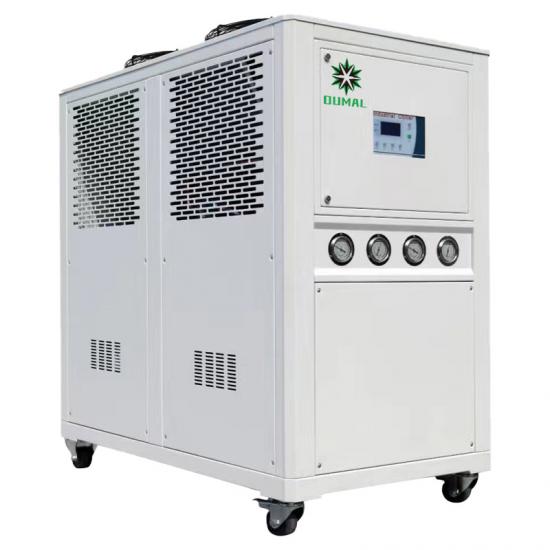
10 HP air to water cooled Metal finishing chillers

Key Industrial Applications:
The 10 HP Air to Water Cooled Chiller is highly versatile and can be widely used in various industrial sectors, including:

Plastic Industry: Cooling molds and machinery in injection molding and extrusion processes to maintain product quality and improve production efficiency.
Electronics Industry: Cooling equipment such as semiconductor manufacturing tools and circuit board production lines.
Chemical Industry: Providing temperature control for chemical reactors, storage tanks, and other processes requiring stable cooling.
Food Processing: Cooling systems for preserving temperature-sensitive ingredients and products during production.
Electroplating: Cooling baths and tanks to ensure optimal conditions for the electroplating process.
Concrete Mixing Plants: Maintaining temperature stability in concrete mixing processes, particularly in hot climates.
Laser Industry: Cooling laser equipment to ensure stable operation and extend the lifespan of machinery.
Printing Industry: Cooling printing machines to ensure consistent operation and quality of printed materials.
PCB Manufacturing: Providing cooling for printed circuit board production lines to maintain precise temperature control during manufacturing.

Benefits of a 10 HP Air to Water Cooled Chiller:
Reliable Cooling Performance: Perfect for industrial applications that demand precise temperature control.
Energy Efficiency: Designed to offer a balance between high performance and low energy consumption.
Environmentally Friendly: Uses ambient air for cooling, reducing water consumption and minimizing environmental impact.
Durability and Low Maintenance: Built for long-term use in harsh industrial environments, offering low maintenance and high reliability.


About Oumal Chiller
At Oumal Chiller, we specialize in providing high-quality industrial cooling solutions, including air-to-water cooled chillers that offer reliable and efficient temperature control for various industrial applications. With years of experience in the chiller manufacturing industry, we provide custom cooling systems designed to meet the unique needs of our clients. Our products, including the 10 HP Air to Water Cooled Chiller, are designed to deliver optimal performance, ensuring long-term efficiency and low operational costs. For more information, please visit ourAt Oumal Chiller, we specialize in providing high-quality industrial cooling solutions, including air-to-water cooled chillers tailored for various sectors such as plastic, electronics, chemicals, food processing, electroplating, and more. Our 10 HP Air to Water Cooled Chillers are designed to offer precise cooling, ensuring optimal performance for your industrial applications. With years of experience and a focus on custom solutions, we are dedicated to helping businesses reduce energy consumption while improving efficiency. For more information, visit our  About Us page.

阅读全文......