Tracked machinery is widely used in construction, mining, agriculture, and earthmoving operations. Its undercarriage plays a vital role in machine stability, operating efficiency, and overall service life. However, continuous operation on muddy, sandy, and rocky terrain can accelerate wear on tracks and undercarriage components. This guide explores essential maintenance practices for different types of crawler machines and various working conditions, helping operators and fleet managers reduce wear, lower maintenance costs, and extend equipment service life.
1.Quick Answer
Extending the service life of tracked machinery undercarriages requires regular cleaning, proper track tension, routine component inspections, and maintenance practices adapted to different working conditions. Removing accumulated mud, gravel, and debris helps prevent excessive wear, while maintaining track tension according to manufacturer specifications reduces unnecessary stress on undercarriage components. Regularly inspecting track chains, track shoes, drive sprockets, idlers, and rollers also helps identify potential problems early. In addition, adjusting operating practices and maintenance schedules for muddy, sandy, rocky, and snowy environments can reduce premature wear, lower repair costs, and improve overall equipment service life.
2.Main Components of Tracked Machinery Undercarriages and Their Maintenance Functions
The undercarriage is a key component of tracked machinery, consisting of the track assembly, drive system, and supporting components. It carries the machine's weight, provides traction, maintains stability, and enables equipment to operate efficiently across different terrains and challenging working conditions. Its condition directly affects machine mobility and overall operating performance.
A typical crawler undercarriage consists of six main components: Track Chains, which connect the track assembly and transmit driving force; Track Shoes, which provide ground contact, traction, and support; Drive Sprockets, which engage with the track chains to move the machine; Front Idlers, which guide track movement and maintain alignment; Track Rollers, which support machine weight and distribute ground pressure; and Carrier Rollers, which support the upper track and help prevent excessive sagging.
For crawler excavators, tracked loaders, and crawler tractors, undercarriage components are constantly exposed to friction, impact, and heavy loads. Without regular inspection and maintenance, premature wear or component failure can increase repair and replacement costs, reduce operating efficiency, and shorten equipment service life. Understanding each component's function and following an appropriate maintenance schedule are therefore essential for reducing undercarriage wear and maintaining reliable machine performance.
3.Undercarriage Maintenance Priorities for Different Types of Crawler Machines
Different types of crawler machines experience different undercarriage wear patterns due to variations in operating methods, workloads, and working environments. Therefore, tracked loaders, crawler excavators, and crawler tractors require specific maintenance practices to minimize unnecessary wear and extend equipment service life.
Tracked Loader Undercarriage Maintenance
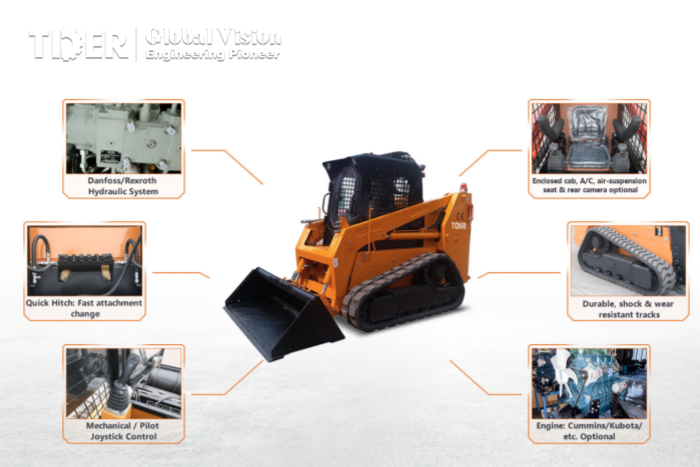
Tracked loaders are commonly used for loading and material handling at construction sites, stockyards, and uneven terrain. Frequent turning, short-distance travel, and heavy loading can increase friction and stress on track shoes and rollers. Regular maintenance should include removing accumulated mud, gravel, and debris from the undercarriage, as well as inspecting track shoes for deformation, cracks, and abnormal wear. Operators should also avoid frequent sharp turns and counter-rotation to reduce unnecessary friction between the tracks and the ground.
Crawler Excavator Undercarriage Maintenance
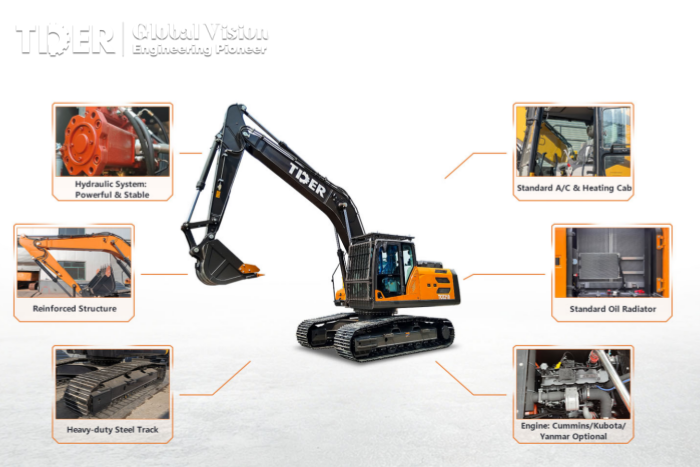
Crawler excavators are widely used in earthmoving, mining, and construction projects. Their undercarriages withstand loads generated by excavation, machine travel, and slope operations. Maintaining proper track tension is essential. Excessively tight tracks increase stress on the drive system, while loose tracks may increase the risk of derailment. Track rollers, front idlers, and drive sprockets should also be inspected regularly to ensure smooth track operation.
Crawler Tractor Undercarriage Maintenance
Crawler tractors are primarily used for dozing, land leveling, and towing, often under continuous traction loads and high ground resistance. Working in farmland, muddy areas, and soft soil can accelerate track chain wear and cause mud accumulation inside the undercarriage. Maintenance should focus on checking track chain connections, inspecting track shoe wear, and removing accumulated mud and debris to ensure that rollers and drive components operate properly.
4.How to Extend Undercarriage Service Life in Different Working Conditions
Different working environments expose tracked machinery to different types and levels of undercarriage wear. Mud, sand, rocks, concrete, and snow can all affect the service life of track chains, rollers, and drive components. Therefore, maintenance practices should be adjusted according to actual operating conditions.
Muddy and Wet Conditions
When operating in muddy and wet conditions, soil can accumulate between track chains, track rollers, and drive sprockets. Excessive buildup may restrict roller movement and increase undercarriage resistance. After operation, remove accumulated mud and debris, paying particular attention to rollers and drive components. Regular cleaning also helps prevent mud from hardening or freezing in low temperatures.
Sandy and Dusty Conditions
Sand and dust are highly abrasive and can accelerate wear on track chains, drive sprockets, and roller contact surfaces. When working in sandy or dusty environments, increase the frequency of undercarriage cleaning and wear inspections. Remove accumulated particles and check track links, pins, and rollers for signs of abnormal wear.
Rocky and Gravel Terrain
Rocky and gravel surfaces can expose track shoes and undercarriage components to repeated impacts. Sharp stones may also damage track shoes or become trapped between moving components. Operators should choose smoother travel routes whenever possible, avoid excessive speeds over uneven ground, and regularly inspect track shoes for cracks, deformation, and loose connections.
Hard and Concrete Surfaces
Operating on concrete and other hard surfaces can increase friction between the tracks and the ground, accelerating wear on track shoes and related components. Minimize unnecessary travel distances and avoid frequent sharp turns, counter-rotation, and excessive track spinning to reduce additional friction and premature wear.
Cold and Snowy Conditions
In cold and snowy environments, snow and mud can accumulate inside the undercarriage and freeze, potentially affecting track chains, rollers, and drive components. Remove accumulated snow and frozen debris after operation, check track tension, and inspect lubrication conditions according to manufacturer recommendations to maintain reliable undercarriage performance in low temperatures.
5.Daily Undercarriage Maintenance and Inspection Checklist
Pre-Operation Inspection
Before starting the machine, inspect the tracks for cracks, deformation, loose components, and unusual wear. Check whether track tension meets the manufacturer's specifications. Examine track chains, track shoes, and connecting components to ensure they are secure. Also, check the drive sprockets, idlers, and rollers for oil leaks or other visible problems. Any issues should be addressed before operation.
Post-Operation Maintenance
After each working shift, remove accumulated mud, gravel, and debris from the tracks and undercarriage, especially around the track chains, rollers, and drive sprockets. Inspect track shoes, chain links, and rollers for abnormal wear, damage, or looseness. Keeping the undercarriage clean helps reduce friction and prevent unnecessary component wear.
Periodic Maintenance and Wear Inspection
Regularly measure the wear of track links, drive sprockets, track rollers, and idlers according to operating hours and working conditions. Machines operating in demanding environments may require more frequent inspections. Lubrication, adjustments, and component replacement should always follow the manufacturer's maintenance manual.
Daily Inspection Checklist
Check tracks for cracks, deformation, and abnormal wear.
Confirm that track tension is within the recommended range.
Inspect track chains, track shoes, and connecting components.
Check drive sprockets, idlers, and track rollers.
Look for oil leaks around the undercarriage.
Remove mud, gravel, and debris after operation.
Record unusual wear and components requiring repair.
6.Undercarriage Maintenance Comparison for Different Crawler Machines
Different types of tracked machinery have different operating patterns and undercarriage maintenance requirements. Tracked Loaders require particular attention to track wear during loading and turning. Crawler Excavators need regular checks of track tension and load-bearing components, while Crawler Tractors require closer inspection of track chains and shoes during pushing and pulling operations.
|
Comparison |
Tracked Loader |
||
|
Main Operations |
Material loading and handling |
Excavation, trenching, and earthmoving |
Dozing, land leveling, and pulling |
|
Key Inspection Points |
Track shoes, chains, and drive sprockets |
Track tension, rollers, and idlers |
Track links, shoes, and drive sprockets |
|
Main Maintenance |
Clean the undercarriage and avoid sharp turns and counter-rotation |
Check track tension, inspect roller wear, and remove debris |
Remove accumulated soil and inspect chain connections and track shoes |
|
Typical Working Conditions |
Soft ground, muddy areas, and construction sites |
Muddy, sandy, and uneven terrain |
Soil, mud, rocky ground, and agricultural sites |
7.Practical Applications: Undercarriage Maintenance and TDER Product Technology
On construction sites, crawler excavators often operate on soil, gravel, and uneven ground. Operators should regularly inspect track shoes, chain links, and track rollers, while removing stones trapped in the undercarriage. In mining operations, heavy loads and rock impact can accelerate component wear, making frequent inspections of drive sprockets, idlers, and rollers essential. In muddy conditions, accumulated soil should be removed after operation to prevent interference with roller movement.
TDER's two crawler excavator models provide practical examples. The TCE210 (21-ton) features an reinforced undercarriage with eight bottom rollers and 600 mm track width. The TCE230 (23-ton) uses a reinforced nine-bottom-roller undercarriage, also with 600 mm track width. The TCE210 is designed for construction and challenging ground conditions, while the TCE230 is suitable for mining and heavy-duty earthmoving. For both models, operators should pay particular attention to track tension, chain links, drive sprockets, and roller wear, following the manufacturer's maintenance recommendations.
8.Common Undercarriage Wear Problems and When to Repair or Replace Components
Common Wear Problems
Continuous operation can cause various undercarriage problems. Track chains may stretch due to repeated friction and heavy loads, resulting in improper track tension. Track shoes can develop cracks, deformation, or loose bolts, while worn drive sprocket teeth may affect chain engagement and increase transmission wear. Other warning signs include leaking track rollers, abnormal idler wear, loose tracks, and track misalignment.
How to Decide When to Repair or Replace
When wear or damage is detected, inspect the affected components and measure key dimensions, including track link wear, sprocket tooth wear, and roller wear. If measurements remain within the manufacturer's allowable limits, adjustment or repair may be sufficient. Components that exceed specified wear limits or show serious cracks, deformation, oil leakage, or functional problems may need replacement. Track chains and drive sprockets should also be inspected together because their wear patterns are closely related. Always refer to the manufacturer's maintenance manual and wear specifications when making repair or replacement decisions.
9.Frequently Asked Questions (FAQ)
How often should tracked machinery undercarriages be inspected?
Tracked machinery undercarriages should be inspected daily for visible damage, loose components, and debris buildup. A more thorough inspection should be performed regularly to identify wear and prevent costly repairs.
How can I reduce crawler excavator track wear?
Clean the undercarriage regularly, maintain proper track tension, and avoid excessive high-speed travel or sharp turns. Operating on suitable terrain and following routine maintenance schedules can also extend track life.
What causes uneven wear on tracked machinery?
Uneven wear is often caused by incorrect track tension, misalignment, uneven ground conditions, and improper operating habits. Worn rollers, idlers, and sprockets can also contribute to uneven track wear.
When should track rollers and sprockets be replaced?
Track rollers and sprockets should be replaced when they show excessive wear, cracks, damage, or abnormal noise. Regular wear measurements and inspections can help determine the right replacement time and prevent further undercarriage damage.
10.Conclusion
Proper undercarriage maintenance is essential to extending equipment service life, reducing operating costs, and improving operational efficiency. Regular cleaning, correct track tension, timely inspections, and component replacement help minimize wear. However, tracked loaders, crawler excavators, and crawler tractors require different maintenance strategies depending on their working conditions. With a range of reliable crawler machinery and equipment solutions, TDER helps customers choose suitable machines for different applications and demanding operating environments.
|
Specifications |
Crawler Excavator |
Crawler Tractor |
|
|
Product Model |
|||
|
Product Name |
1000kg Tracked Skid Steer Loader |
21-Ton Crawler Excavator |
50HP Crawler Tractor |
|
Rated Load / Operating Weight |
Rated Load: 1,000 kg |
Operating Weight: 21,000 kg |
1,600 kg |
|
Engine Power |
55 kW |
129 kW |
50 HP |
|
Engine Brand / Model |
Xinchai A498BGZ/T (listed configuration); other options available |
Weichai WP6G175E21 |
Weifang series / Laidong 490 |
|
Bucket Capacity |
0.5 m³ |
1.0 m³ (specification table) |
Depends on selected agricultural attachments |
|
Maximum Travel Speed |
12/18 km/h |
2.4–4.3 km/h |
20 km/h |
|
Track Type |
Material not specified on product page |
Crawler track |
Rubber track |
|
Track Width |
Not specified |
600 mm |
230 mm |
|
Track Ground Contact Length |
Not specified |
Not specified |
1,400 mm |
|
Overall Dimensions |
Approx. 3,500 × 1,782 mm (length with bucket × width) |
9,590 × 2,500 × 3,060 mm |
2,650 × 1,450 × 1,300 mm |
|
Ground Clearance |
200 mm |
Not specified |
200 mm |
|
Hydraulic System |
Rexroth hydraulic system |
PNM hydraulic pump, main pump flow: 450 L/min |
Not specified |
|
Main Applications |
Material handling, demolition, drilling, forestry |
Construction, earthmoving, infrastructure projects |
Dryland farming, field cultivation, seeding, and land preparation |